Clearing out: 5th grade U.S. history, part 2

Last week I started talking about a thematic approach to 5th grade U.S. history curriculum that a teacher and I designed (but never were able to implement.)

short version: instead of slogging through events 1852-1996, wherein students would be without context year after year, we would approach the topic through themes, neatly covering all 20 curriculum standards multiple times while doing so.

The four themes were

  • CONFLICT
  • POWER
  • CHANGE
  • COMMUNITY

CONFLICT focused on the wars fought by the U.S. between the Civil War and the Iraq War.  POWER focused on political power (including voting rights), economic control, and the change in the U.S.’s global power.  CHANGE focused on technological and social changes. Finally, COMMUNITY focused on all of the above as experienced by Newnan/Georgia.

Ambitious, to be sure.

I will now pause and lament the fact that while paper files will sit in that storage unit until you decide you want to throw them away or actually use them, electronic files are not so durable.  I went looking for the lesson plan template I developed for use at Newnan Crossing with our Enriched Thinking Curriculum, but that was so long ago that nothing will open those simple word processing files, which as far as I can remember were written in AppleWorks.  Oy.  If I have the energy, I’ll recreate it in Word or something and upload it, because it was good.[1]

The nine weeks we were to spend on CONFLICT were organized to have students answer the essential questions:

  • Which American war was the most “preventable”?
  • How would we as a nation be different if we had prevented that war?

Ridiculously ambitious.  But I’d rather fail bigly than play it safe with mere memorization.
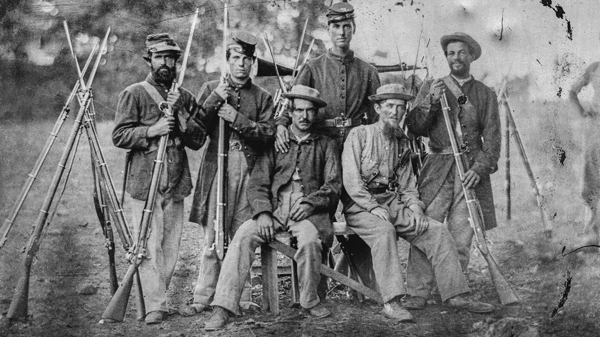
There are five units in my folder on CONFLICT.  Each would probably have taken three to five days in the media center plus time in the classroom.  I note that the date on these pieces of paper is 1998, so our internet access would have been rudimentary.  Google didn’t exist.  Yahoo did, but it was a hierarchical search engine.

The first unit, The Wars of the U.S., was an introductory lesson.  Pretty simple: teams of students worked together to come up with a list of all the wars/armed conflicts the U.S. has been involved in since 1859.  The actual agenda of the lesson was to introduce the essential questions and to train the students to think independently using the Big 6 as a framework.

The second unit was Producing Context: What did war look like?  Teams of students were assigned specific wars and asked to find images of that war.  The idea was to start a visual timeline to reinforce the sequence of conflicts.  Plus kids love looking up uniforms and weapons.  I note in the materials list a “How to print an image from a website” handout, so we must have had at least that capability.

The third unit was Producing Context: A timeline.  Pretty simple: the class creates a timeline of the U.S. and embeds the wars in them.  Who were the presidents?  What else was going on?  (Here we sneaked in all the other things we would encounter in the other thematic units.)

The fourth unit was Producing Context: What did war feel like?  This one was fuzzier, but the gist was that they would read/watch a variety of first-person accounts, both historical and fictional, about the wars in question.

The fifth unit was Conflict: Defining the problem, and it was then that students would begin tackling the essential questions.  What will they need to know about each war to make their decisions?  Can they construct a “model” for assessing U.S. wars which will give them a basis for comparison?  Here are some bits of the lesson plan that are pretty cool:

  • Introduce the concept of “bracketing”: “Yes, this is something [about answering the EQs] we will have to worry about sooner or later, but we don’t have to worry about that right now.”  Students should be explicitly taught to tolerate ambiguity.
  • Ask the students to write a journal entry telling which war they predict they will find most interesting, based on what they’ve learned so far.

That’s long enough a post for today.  Next I’d like to circle back and look at all the pieces of educational research that I had pulled together for this entire approach. Stay tuned.

Part 1 | Part 3

—————

[1] Here it is, a downloadable Word doc.

An unbelievably easy answer

You may recall that back in December the head of the current Republican administration tweeted his desire to jumpstart the nuclear arms race, because that makes sense.[1]

Now it is being reported that he and his boyfriend Vlad were talking the other weekend, and the leader of the free world confessed that it seemed to him that neither country had enough nuclear warheads and that Obama was a poopyhead for negotiating the most recent START agreements limiting the two countries.  Not banning nuclear weapons, minds you, just limiting, but even that chafes the Leader’s butt.

Sweet baby Cthulhu, how small are the man’s hands??

Off we go to our senators, who would be in charge of any treaties, etc.

On Dec 24, 2016, I emailed you to ask if you agreed with the president’s tweet that we should restart the nuclear arms race.  You haven’t answered.

Now it appears that the president, in a private talk with Putin, has denigrated the limitations of the most recent START agreement.

If this proves to be the case, will you support a nuclear arms race?  If so, to what end?

I do not expect an answer.

—————
[1] It does not make sense, not strategically, not tactically, not militarily, not ethically, not even economically.

Clearing out: 5th grade U.S. history, part 1

I’ve cleaned out 30 years of stored papers, and this is one of a series of posts about things I found therein.

Long ago, a 5th-grade teacher took the PTB seriously when they said they wanted students who could think critically (as if), so she and I sat down to redesign the approach to the social studies curriculum, which at the time was U.S. history, 1860–present (as if).

One of the elements we had to deal with at the time was the Quality Core Curriculum [QCC], which was (in the words of the task force that junked it for the Georgia Performance Standards) “a mile wide and an inch deep.”  Every area of the curriculum was just jam-packed with content standards.  We were tasked with teaching ALL THE THINGS, KENNETH.

For example, here are the 20 standards we were looking at:

SS.5:

  1. Explains duties/responsibilities of branches of govt
  2. Explains individual rights, common good, self-govt, cultural awareness
  3. How citizens affect change: voting, campaigns, petitions, org. protests, running for office
  4. Economic interdependence: producing, consuming, exchanging, investing, specializing
  5. Production: who decides, what factors, how distributed?
  6. Civil War
  7. Economic/social change late 19th c.: monopolies, transp., migration, immigration
  8. Compare life: African-American, Asian, Hispanic, European
  9. American West, late 19th c.: miners/prospectors, ranchers/farmers, railroad workers
  10. Changes re: Indians: encroachment, relocations, govt policies
  11. Socio- politico- economic changes: Roosevelt, Taft, Wilson: 16-19 amendments; child labor, unions
  12. Causes of WWI: nationalism, militarism, imperialism
  13. 1920s: steel, home ownership, auto, sports, electricity
  14. Great Depression: cause/effects
  15. WWII
  16. GA & US during WWII: suburbs, mobilization, technology
  17. since WWII: UN, Cold War, Korea, Vietnam, USSR
  18. GA & US since WWII: civil rights, immigration, women, technology, gangs (what??)
  19. Culture: art, music, literature: 20s, Harlem/Big Band, rock, art
  20. Primary sources: biases, maps, etc

I mean to say, what?  Looking back over this, I can only imagine the minefield this material would constitute today.  No wonder Betsy Devos and her ilk are so opposed to “government schools” indoctrinating their children.  Who would vote for the Current Occupant who had even two-thirds a grasp on this material?

All right.  Back then, we were being told that students learned through direct engagement with the material.  Crazy talk!

Here’s what we came up with. Rather than slog through the timeline year after year and try to snag all the socio-politico-economic ideas along the way, let’s focus on four major themes: Conflict, Power, Change, and Community.[1]  Spend nine weeks on each theme.  Focus students on constructing knowledge about each theme, using U.S. history as a frame on which to hang the ideas.

Wait, what?  Not teach ALL THE THINGS??

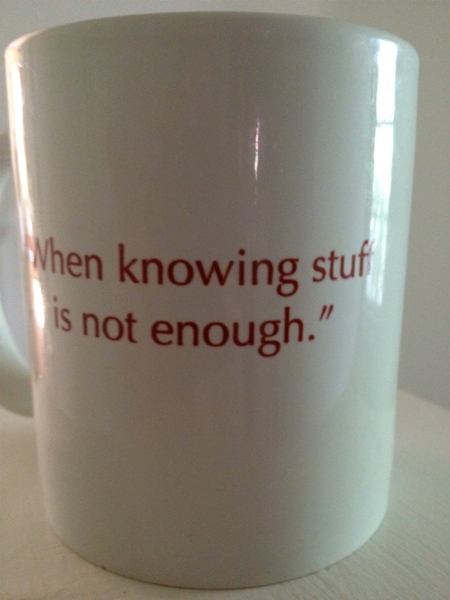
Exactly.  Remember the motto of the Curriculum Liberation Front:

The idea was that if the students were engaged, working their little behinds off on finding out what war looked like and felt like, 1860-1975, they would actually tumble to the THINGS as we went along because they would actually have the context to understand and be curious about the THINGS.[2]

But, Dale, how can you be sure that you’ve covered all the standards?  If you’re doing all this fuzzy research/critical thinking skills, how will they ever learn about Pickett’s Charge?

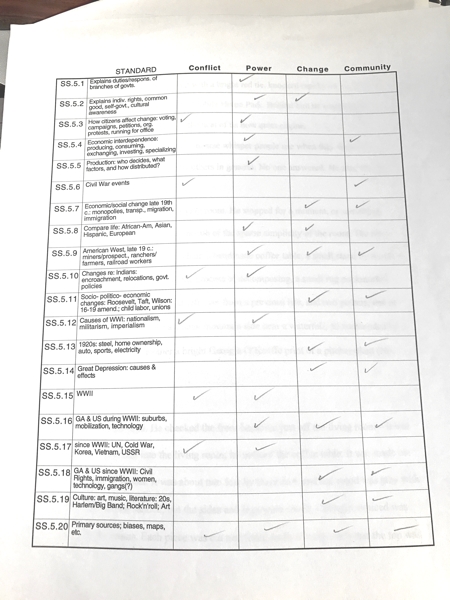
That was a legitimate concern, and so I did a chart of all four themes and how they might reflect each standard.

Would you look at that?  Not only would we cover all twenty standards, we would hit all of them more than once.

NEXT: What would this have looked like?[3]

—————

[1] We’ll look at each of these in the next post.

[2] For a quick post on the issue of context, see here. (From the very early days of this blog, when I wrote a lot about curriculum.)

[3] Spoiler alert: we never got to implement this plan.

A Fantasy Interview

One day, in the gym locker room,[1] on the flatscreen TV:[2]

FOX NEWSBOT: We welcome to the program Congressman Frothermouth, from [Red State Redacted].

REPUBLICAN FROTHERMOUTH RIGHTWINGER [RFR]: First step repeal Obamacare repeal it disaster horrific consequences protect American freedom health care costs we’ll have a plan BUT FIRST REPEAL IT BECAUSE ARGLE BARGLE GYAAAAAHHH!

BOT: You say that the Affordable Care Act has been a disaster…

RFR: ARGLE BARGLE GYAAAAAHHHH!

BOT: In what way?

RFR: [all the terrible things that would still have happened even if ACA had never existed]

BOT: Let’s look at some data.  More citizens now have insurance than before ACA.  Health care costs have actually slowed. There are fewer preventable deaths now.  People are now actually getting preventive care.  Are you saying that the plan the Republicans will propose will continue these trends or even better them?

RFR: Obamacare has crashed and burned ARGLE BARGLE GYAAAAAHHH!

BOT: Let me ask you this.  It’s been eight years since the Congress passed the ACA.  Why don’t the Republicans already have a plan to replace it?  After all, you’ve voted over sixty times to repeal it. Surely you’ve been at work all this time?

RFR: REPEAL THE MANDATE SELL ACROSS STATE LINES AMERICANS GYAAHHH!

BOT: I’ll ask again.  Why don’t you have a plan ready to go to replace the ACA?

RFR: We placed plans on Obama’s desk but WOULDN’T SIGN IT ANTICHRIST REPEAL OBAMACARE!

BOT: If you had a plan, and Obama wouldn’t sign it, shouldn’t you be able to pass it now secure in the knowledge that the Republican Administration would sign it into law?  Why don’t you do that?

RFR: First we have to REPEAL THE FAILED OBACAMARE ARGLE BARGLE GYAAAAAAHHHHHHH!

BOT: Is it at all possible that you have no plan, you never had a plan, that you will never have a plan, mainly because the ACA was a Republican plan to begin with?  Is it at all possible that the 60+ votes you took to “repeal” it was just grandstanding to rile up the amygdala-based lifeforms who constitute your base and who have no real understanding of the law but who because of your grandstanding now react with visceral hatred at the very mention of the name “Obamacare”?  And finally, is it not possible that you’ve caught your dick in your zipper and the only thing you can do now is keep yelling the same talking points without any coherent approach to legislating the issue?

RFR: WE HAVE TO REPEAL THE HEINOUS[3] OBAMACARE HILLARY’S EMAILS BENGHAZI RADICAL ISLAMIC TERRORISTS BOWLING GREEN MASSACRE!

And scene.

—————

[1] It’s the locker room where I look like this:

[2] Based on an actual Republican congressman’s interview, for real.

[3] No, it is unlikely the RFR would know or use a word like heinous, but this is a fantasy, remember?

Dear White House Press Corps…

One of the drawbacks of swimming at the gym now is that the flatscreen TV in the locker room is tuned to Fox News, and I never thought I would see the day when I hoped that sports would be on the tube.

Me, after two weeks at the gym. (artist’s conception)

Today I heard yet another presser hosted by Melissa McCarthy Sean Spicer and watched in disbelief as one reporter, referring to the Current Occupant’s statement yesterday that terrorist massacres were being “under-reported” by the “very very dishonest press,” fumbled his question.  Spicer skittered away across the surface of the pond, untouched by any attempt to get some hard truth from him.

Sweet Jebus, White House Press Corps, do yourself a favor and head straight to the nearest elementary school. Sign in, and ask to be assigned to a kindergarten class.  Take notes.

BECAUSE KINDERGARTEN TEACHERS CAN GET BETTER ANSWERS OUT OF SEAN SPICER THAN YOU CAN.

Here’s the deal: Never never ever ask a kid a yes/no question about some misbehavior.

TEACHER: Did you hit Suzie?

SEAN: No, I was just blah blah blah.

No.  Watch and learn.

TEACHER: Tell me what happened here.  Sean, you go first.

SEAN: Well, Suzie called me a doopyface so I hit her.

And scene.

How does this work for you guys?

Instant replay:

REPORTER: Yesterday, when the President said that terror attacks were being under-reported, did he mean blah blah blah?

SPICER: —::deny:: — ::pivot:: — ::spin:: — [runs away laughing, possibly shouting “nanny-nanny-boo-boo”]

That’s not how you do it.  Watch and learn:

REPORTER: Yesterday, the President said about terrorist attacks, and I quote, “It’s gotten to a point where it’s not even being reported. And in many cases the very, very dishonest press doesn’t want to report it. They have their reasons, and you understand that.”  What did he mean by that?

SPICER: Um… I thought Melissa McCarthy was funny, but she chewed too much gum.  No more questions.

So there go you.  Hie thee to an elementary school and pick up some skills.  I imagine you could even learn this in Betsy Fupping Devos’ new string of for-profit Talibaptist madrassas.  Well, if any of the people being paid minimum wage to ride herd on students there are in fact teachers.

Clearing out: a series

We have begun the process of THROWING AWAY ALL THE THINGS, KENNETH!

Actually, we’ve been doing it for a couple of months now, but this past week I was instructed to go to the storage unit and bring back all the boxes of papers from our various careers that for some reason we thought were worth storing.  For some reason.  So off I went and returned with fourteen banker’s boxes of folders, notebooks, and books.

All that remains out of six boxes. Need folders or notebooks? Hit me up.

The immediate impetus for this was the city’s shredding day last Saturday; we wanted to have everything ready to dump into the chopper.  The secondary impetus was an eventual clearing out of the storage unit so that we’re not paying $100/month to keep stuff that apparently we don’t need and never see.

But the overarching impetus is our old friend death-nesting: making those final adjustments to one’s nest and then sliding towards sweet, sweet decay.

I have to say that I was very impressed with my collections.  I had lesson plans and research materials from both East Coweta High School and Newnan Crossing Elementary.  I had directorial prompt scripts from my entire career. I had the complete collection of the The Line Creek Review, ECHS’s literary magazine that was shoved onto my plate and which I revamped from an annual mausoleum of teen angst poetry into an award-winning monthly magazine.[1]

I had a ton of old music, some of which has never been transferred to actual music files.  There were all kinds of News from the Media Center things from Newnan Crossing—my attempts to market my services to the excellent staff of teachers there who were naturally suspicious of this high school guy.  There were tons of printouts from Usenet articles on all those new technologies (1993, so you know the fossils I’m talking about).

There were the training presentations for both the Curriculum Liberation Front (ECHS) and the Enriched Thinking Curriculum (NX), my attempts to implement all the current research on brain-based learning, active learning, authentic and performance assessment: all those things that “leaders” have said they want in their schools and in their graduates, yet somehow have legislated against.

Lots and lots of stuff.

And most of it went to the shredder.  I have kept some sample lesson plans, the CLF and ETC materials, and a couple of files of memorabilia, but almost all of it was trash.  Sic transit gloria mundi and all that.

It was with more curiosity than rue that I went through all those papers.  This was not a heart-wrenching ordeal.  Mostly I felt affirmed: I was good at this stuff.  I still am.[2]

Anyway, I figured I could wring a series of blog posts out of what I found and what I kept.  Stay tuned.

—————

[1] The April editions—in which we parodied some other publication—are still hysterical.

[2] If your school or school system needs a consultant to kickstart a critical thinking skills component to your curriculum, or help integrate your media center in a more meaningful way, I work cheap.  Call me.

Lost and found

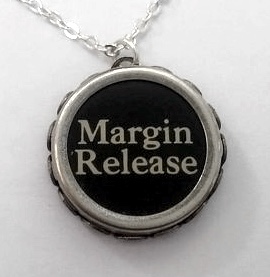
Back in 2010, my Lovely First Wife and I found ourselves in Seattle, where we were staying with inlaws-to-be and attending the Winter Olympics across the way in Vancouver. While there I purchased a little charm, as in charm bracelet/pendant thingie, an old typewriter key: MARGIN RELEASE.

I blogged about it here.

tl;dr: on old typewriters, margins were set by physical metal “tabs,” and if the word you were typing at the end of the line were only going to go past the margin by one or two letters, you could press this key and it would allow you past that boundary.

I bought it to be a talisman on the new Utilikilt I purchased there in Seattle at the flagship store, and I wore it on a little chain attached to a belt loop, along with a little clay talisman of the Man-in-the-Maze design that I got in Jerome, AZ.  The effect was trés woo.

Alas, it has vanished.  I’m thinking that it was last week when I was vacuuming/mulching all the leaves from the labyrinth for an evening out there.  If so, then I might still come across it somewhere.

However, it just as easily could have vanished at any point in the last four or five months.  If it fell off at Alchemy, then I know it’s gone—although I have repeatedly stumbled across items there that I thought were gone forever. Still, I’ve ordered a new one from Etsy, all the way from Australia.  That’s the one in the picture, actually.  I’m prepared to face the margins again.  If the old one shows up, I can gift the new one.

In preparing to write this post, I did a quick search for the original post and realized with something of a shock that it was written at about this time in 2010—seven years ago.  This was before getting and losing the directorship of GHP; before retiring; before becoming ordained by the Universal Life Church so I could perform wedding ceremonies; before I even thought seriously about attending Burning Man or indeed knowing that there was a regional burn here in GA; before formulating the Nine Precepts of Lichtenbergianism and beginning my crusade for world domination.

I have pushed past a lot of margins since then.

Sportsball? Have some cocktails.

I am given to understand that there is some kind of sportsball thing this weekend, and that at least one of the “squads”—I think that’s the correct term—prefers dressing up in red- and black-colored clothing items.

I was also told that acquaintances of my Lovely First Wife were hoping to avail themselves of my cocktail expertise to create a cocktail for this event.  Since I was not available, I offer instead two cocktails that are red and black, created for another concern that prefers red and black.

The first one is a champagne cocktail; the second is a margarita.

Ms. Dawg

  • 1 oz. orange brandy, e.g., Grand Marnier
  • 1 oz. cranberry/pomegranate juice
  • 1 tsp. blood orange bitters
  • champagne/prosecco
  • lime
  • black sugar

Take a small slice of lime and juice the rim of a champagne flute.  Rim with black sugar.  Drop the lime slice into the flute.  Add the first three ingredients, then top off with champagne or prosecco.

Some helpful tips: Make your own Grand Marnier. (This is also useful.)  The blood orange bitters is amazingly available at Publix in the mixer section.  I haven’t checked locally, but both Michael’s and Hobby Lobby should carry Wilton Black Sugar.

Srta. Dawg

  • 1-1/2 oz. tequila, your choice, but for the love of Dionysus, don’t use cheap stuff
  • 1 oz. orange brandy, e.g., Grand Marnier
  • 3 oz. cranberry/pomegranate juice
  • black salt
  • lime wedge

Rim the glass with the lime wedge and black salt; dump the wedge into the glass with ice.  Pour all the other stuff into the glass.  Drink.

The combination of the salt and the sweetness of the juice is a very nice touch.

So there you go, cocktails for your sportsball event party thing.  Enjoy.

The Labyrinth ::sigh::

I was all prepared to rant about that idiot Gregg Phillips, who has been the source of the fable that “3 million illegals voted”[1] in the last election.  I was going to advise Chris Cuomo and other denizens of cable news to confront him, call him a charlatan—A CHARLATAN, SIRRAH— and eject him from the studio.

But I’ve decided to blog about my labyrinth instead.  I’m going to eschew the righteous bitterness of our time and instead radiate hope and light.[2]

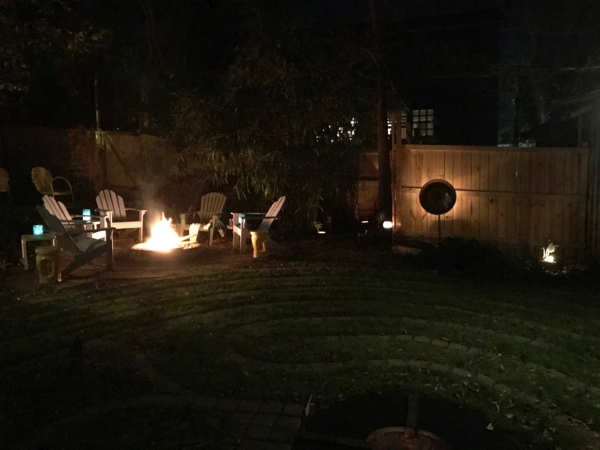
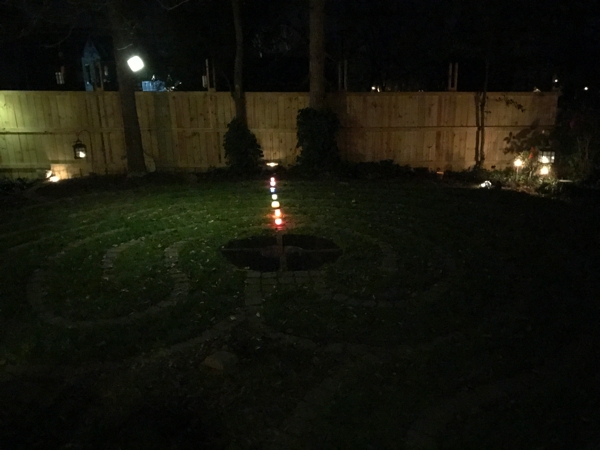
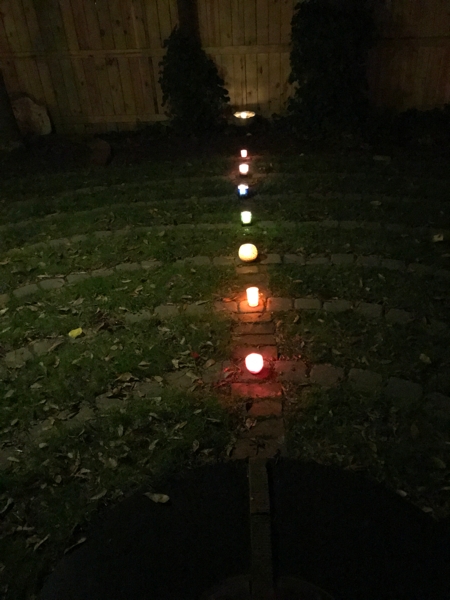
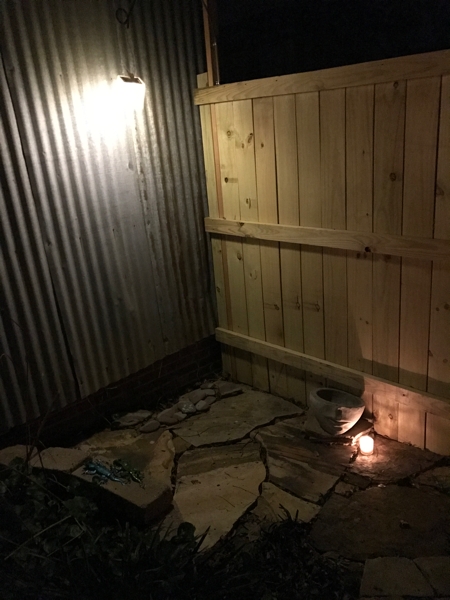
Last night, I and several people I like had the chance to sit by the fire in the labyrinth, and we took it.  Since the new iPhone is supposed to be able to take better low-light photos, I put it to work.

This is my favorite place in the worlds.

Isn’t this beautiful?

The new corner (above) is shaping up very nicely.  I have a new stone slab that will be a bench there; stay tuned for updates.

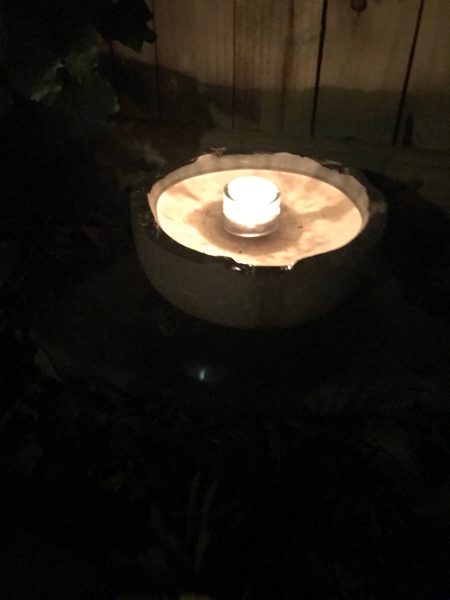
The bowl at the west point.

Either your daily reminder of your mortality or your daily swig of vodka.  It’s all about choices, innit?

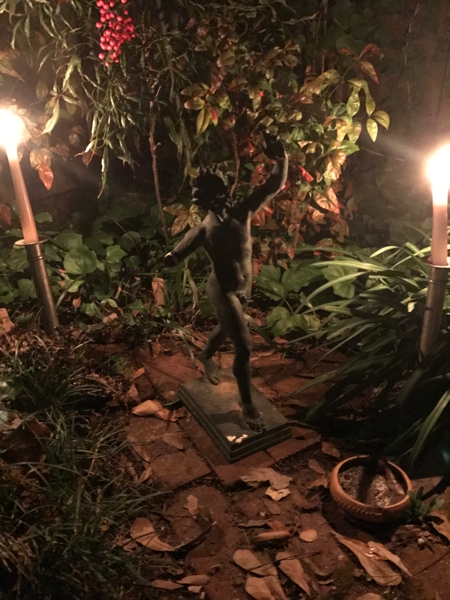
My friend Dionysus was in fine fettle last night, broken arm and all.

There, don’t you feel better?  I do.

—————

[1] And yet, somehow, failed to swing the election to Hillary Clinton, for whom they all voted.

[2] Shut up, I am too.

A new cocktail: The Viola Nouveau

I’ve already blogged about the creation of this drink over at Lichtenbergianism.com, but for the sake of completeness I’m adding it here.

The Viola Nouveau

Stir with ice, pour into coupe, twist lemon peel and toss it in, and finish with 3–4 drops more of the bitters.


Violette Syrup (Regarding Cocktails, p. 20)

  • 2 oz gin
  • 1 oz violet syrup, such as Monin Violet Syrup
  • 1 oz simple syrup

It is quite tasty, with a lovely floral/citrus bouquet finishing with the slight bitterness of the gentian in the Suze.

—————

[1] The owners of 18•21 Bitters suggested (via Twitter) naming it The Morning After because it starts sweet and ends in bitter regret or something, but then admitted they weren’t good at naming cocktails.