My secret lust

Recently I had the pleasure of reading Grock, King of Clowns, the memoir of Adrien Wettach.  No, I had never heard of him either, but Mike Funt said I should read it, and so I found a used copy on Amazon and ordered it.

Totally delightful read, even though I had no clue as to who this man was or how he managed to retire to a 30-room villa in Italy as a millionaire after 50 years of performing as the most famous clown in the world. We live and learn.

But that has nothing to do with my secret lust.

For this book was a discard from a university library, and tucked away in it were these:
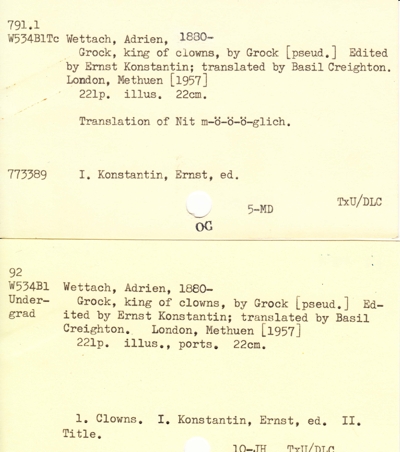
::sigh:: Have you ever seen anything more beautiful?  The only way these could be more arousing would be if they were a complete set.  Still, I mustn’t complain.

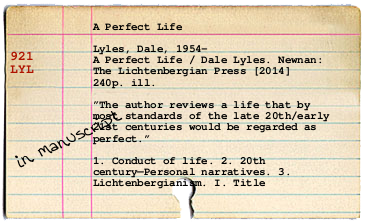
Actually, these are two main entry cards, possibly from two different libraries.  Neither is what I would call complete.  The first one has the original title (Nit m-öglich) but no subject headings; the second has the obvious subject Clowns but not the original title.  There is also the difference of opinion as to where to put this book.  The first library puts it under Circuses in the 791’s, although they could have extended the number with the –092 standard subdivision for biographical works, i.e., 791.1092, although –09 would have been sufficient.  The second opts for the Biography section with the 92, the lazy librarian’s shortcut for the actual number, 921.  Either card is correct.

Both use Cutter numbers for the author rather than the first three letters of the author’s last name.  For the regular school library, that’s an unnecessary complication.  (So would be the extension of the Dewey Decimal number I suggested above. The purpose of such detail is to allow books on similar topics to be grouped together on the shelf, and how many books on the circus does a regular library have, after all?)

This just gets me going.  Even among media specialists I was a cataloging freak.  I loved cataloging, from the days when we still typed the cards ourselves (like these two) to online MARC records.  I knew the Dewey Decimal Classification Abridged edition by heart, and when we built the new East Coweta High School I ordered the full edition.  When it arrived I was physically tingly, if you know what I mean and I think you do.

The new library at ECHS was essentially empty, a blank slate, and over the next four years I got to fill it with 15,000 books, most of which I cataloged myself.  Sure, some came with catalog cards, and most books in those days (1988-1992ish) had full Cataloging in Publication records on their copyright pages, but, you guys, CIP was often hugely inaccurate.  The minions at the Library of Congress were often cataloging based on a title page alone, and that created some incredible howlers, DDC-speaking-wise.  I was compelled—compelled, I tell you—to correct them.

I was so in love with cataloging that I actually programmed an Apple ][e to print a full set of catalog cards for any given main entry.  The way it used to work was that, like the above cards, you had a “main entry” for a book. That main entry included titles, subject headings, editors, illustrators, etc., and after you typed that card, you then typed all the other cards.  Originally, subject cards had the subject line typed in red ink, but around the time I arrived we had settled on ALL CAPS instead.  (See here, for example.)

With my program, you typed in all the elements—author, dates, title, subtitle, publisher, subjects—and then the dot matrix printer spit out every card you needed.  It was awesome, and everyone in Coweta County used it until the state automated us in the early 90s.

Let me be clear: I am not one of those who misses the actual card catalog.  What a nightmare to construct and maintain!  What happens when a book is not returned?  Do you pull the catalog cards?  At the time, the main entry cards (plus title cards) were in one piece of furniture, and the subject cards were in another piece of furniture.  You’d be pulling all these cards from everywhere—pulling the metal rod out of the entire drawer, pulling the card, reinserting the rod, etc.—and, what, storing them?  Because then what if the book shows back up when lockers are cleaned out at the end of the year?  Then you have to refile the cards.  Ugh.

But the cataloging itself?  Remember this scene?  That’s how I feel about cataloging.  I was so notorious amongst my fellow media specialists that when new books came without cataloging, others would wait until I had input mine in the online system, then just add their copies to my main entry.  If the books came with electronic cataloging, I would go through and correct entries, add subject headings, and improve call numbers.  I was incorrigible.

I mean, look at this: Catalog card prøn!

Now go here and get your inner Dewey on!
Labyrinth: the new West point

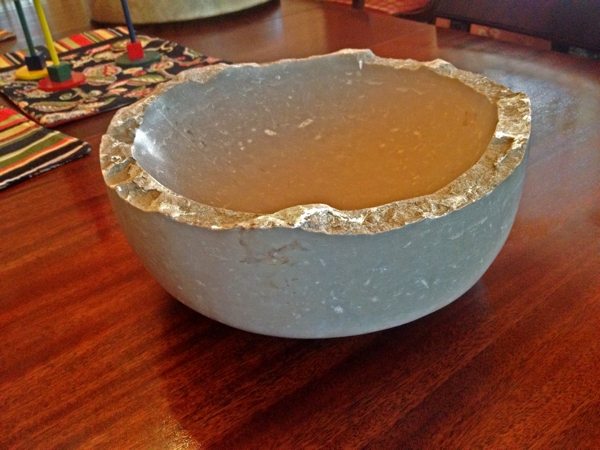
You may recall that last weekend I bought a limestone bowl at the American Craft Council show in Atlanta.  This was for the express purpose of installing it at the west point of the labyrinth.

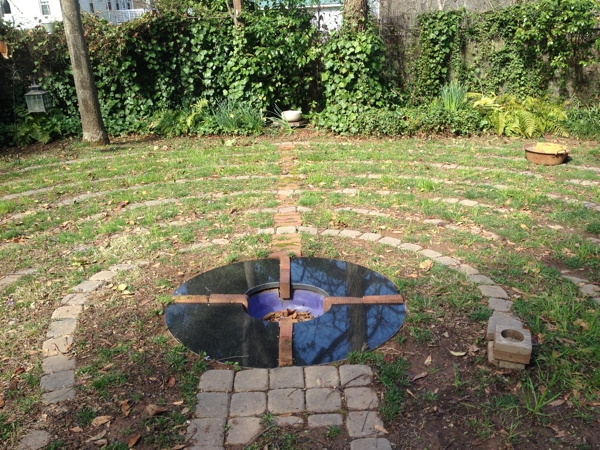
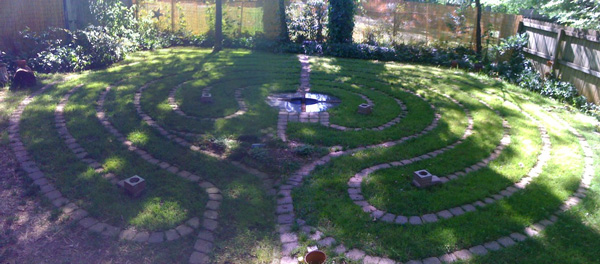
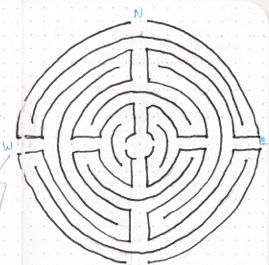
The labyrinth is aligned to the compass, with the entrance at the eastern end.  (When you see photos of the center, the bricks are in line with the points.)  Back in the day, the four elements were each associated with the four directions:

  • East — Air
  • South — Fire
  • West — Water
  • North — Earth

Easy enough.  Over the last six years, each of the four points has gone through various incarnations as I get a better feel for what belongs in the space, and water was the last of the points without a permanent feel to it.  I had settled for a glass bowl that I found at Ross (Dress For Less) for cheap—I had the local glassworker remove the pedestal and reattach it upside down in the bowl to serve as a place to put the candle while the bowl was full of water.

But it froze and broke during the polar vortex, and I decided that this time I would find a permanent solution.  As soon as I saw Brooks Barrow‘s creation, I hoped this would be it.

Oh yes.

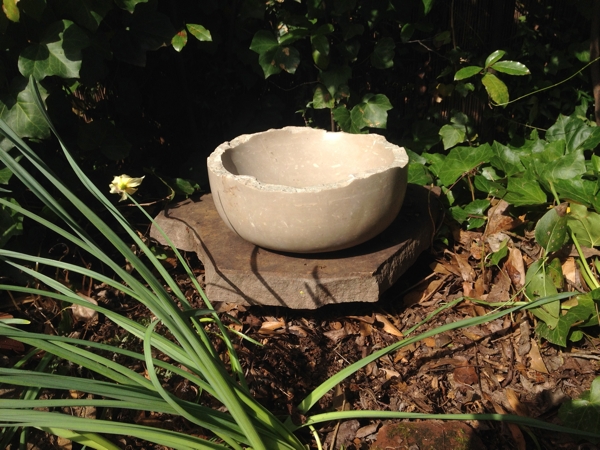
Here it is in situ.  I cleaned out the new ivy growth and raked a bit.  Just now coming up are the Japanese painted ghost ferns that grow in front.  I could plant a couple more there just for effect; they’re such lovely plants.

Here’s a long shot of the bowl, from across the center of the labyrinth:

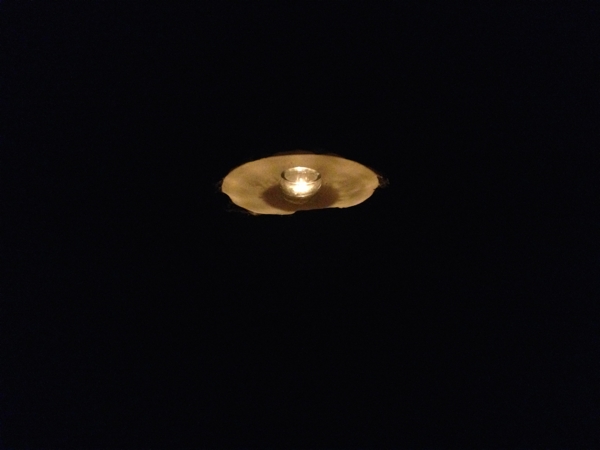
So last night some friends and I had an installation ritual; we used all four elements, with me carrying a bowl of water over to the new bowl.  I poured it in, lit the candle in the center and was immediately struck by how perfect it is.

It’s just this luminous pool of water floating there—perfectly stunning.  Because the bowl’s interior is shallower than the outside, you get a “big bowl” look from the outside, but the inside is this perfect little scoop of light.

Here’s the long shot:

Ta-da!  Finally, all four points are finished to my satisfaction.  I should pull all four together and do a blog post about them as a group.  (For one thing, they have rather tidily arranged themselves from tallest to shortest around the circle: Air–Fire–Water_Earth.)

So there we are, a new piece of the labyrinth.  Stop by and see it.

Burning Man: Order. Community. Transformation. Part Three

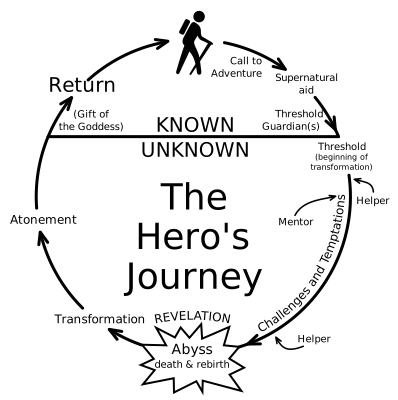
Transformation.  Ah, now we’re down to it.  The third—and to my mind the most important—aspect of ritual is transformation.  The whole purpose of ritual is, like the Hero’s Journey, to change the individual and his society.

From simple rituals like shaking someone’s hand upon being introduced to them [now our social interaction is different than it was a few moments ago] to bar mitzvahs [now the boy is a man] to Catholic confession [now your soul is unburdened by your sin] to GHP [now the student makes intellectual, emotional, and social connections that he/she didn’t before] to Burning Man […], we do not remain the same after undergoing the ritual process.

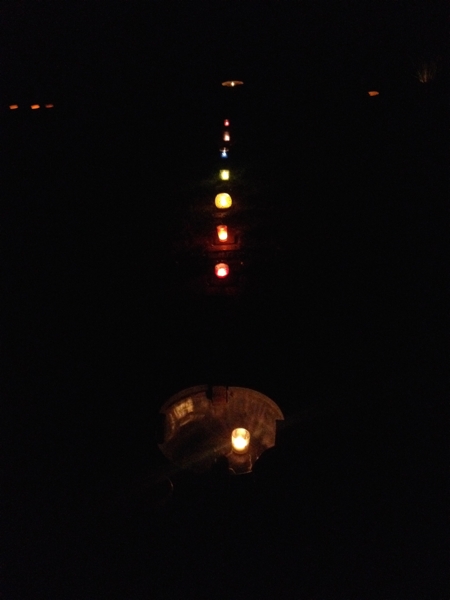
With a labyrinth, as I’ve said before, the change is entirely internal and personal.  Simply walking through a labyrinth is not likely to produce a change.  The trick is to walk it mindfully, to be open to its suggestions.  It is amazing to me the different ways my own labyrinth can speak.  Sometimes it’s the turning from one direction to another.  Sometimes it’s the approach to the center.  It has spoken through the length of the path; the return journey; what I was wearing (or not, as the case might be); the sculpture/totems at the compass points; the calligraphic patterns in the bowl in the black granite center; the chakra/rainbow candles along the Western Path; the view from the center.

I have taken problems in with me and found solutions.  I have had problems present themselves.  I have found peace, and I have found perturbation.  I’ve had profound revelations, and trivial realizations.  I’ve expressed gratitude, joy, bitterness, grief.

And it’s the ritual that does it.  Getting up from the fire (usually) and making the decision to approach the Path.  Standing for a moment at the entrance.  Walk. Listen.  See.  Stand at the center.  Return.  Exit.

Meaning and transformation: I haz it.

Who knows what we will find at Burning Man?  We’ve already talked about the structure of what we will offer, but we do not know what transformations that participants will end up with.  We cannot know.  We cannot even know what transformations will be wrought upon us.  But if we offer a ritual, and Burners approach it as a ritual, then transformation will occur.

Burning Man: Order. Community. Transformation. Part Two

Communitas is the second of the products of ritual.

It is easy to see why this is so: for a public ritual such as 3 Old Men, people come together to participate.  They have agreed, corporately, that this action is good and appropriate and that it must be done.

And by doing so, they bond themselves into a community.  They are part of something larger than themselves.  Indeed, they have crossed that line of liminality into something universal.

Note that this communitas is not tribalism (although certainly tribalism uses ritual to reinforce itself).  Those who commit to a ritual come to understand that they are part of the Order created by the ritual, and more importantly, the others in the ritual are part of the same Order.  They are a Community.

With the 3 Old Men, we offer the Burning Man community a ritual of passage: a hero’s journey from the outside to the center and the return, ending with an agon that assumes meaning according to the metaphor constructed by the participant.

One thing that interests me about our ritual is that it differs from the experience of a regular labyrinth. A regular labyrinth offers one path in and one path out, usually the same path; the ritual is a meditation, seeking meaning and metaphor in the walk, undisturbed by conscious choices. In our labyrinth, on the other hand, choice becomes an integral part of the journey.  I don’t know if you’ve traced the pattern, but each of the four paths branches twice before returning to itself.  It is not a maze; there are no dead ends, and you cannot get “lost,” but you must at least pick a path (twice) on your journey to the center—and that’s after picking which entrance to use.

Once in the center, choosing an exit reverses the process, only this time, your choice involves a choosing, if that makes sense: more than the direction you exit, there are officiants standing outside three of the four exits, each offering a different agon.  Indeed, choosing to undergo an agon or not becomes a major part of the ritual.

More: the question arises of what happens when you have chosen to exit towards the officiant who offers a blessing, for example, and while you are making the journey outward, the officiants make their procession to another entrance.  Do you continue your path, exiting to an agon (or the absence of one) different from the one you had hoped to encounter?  Do you stop, return to the center, and exit to your original choice?  Can you do that?

Thus those who participate in the 3 Old Men’s ritual will find themselves involved in a communitas which they may not completely understand—it makes no demands of them to join a “community,” but it does lead them into a confrontation with a structure offered by three mysterious elders, a structure that asks them to regard the choices they make—and the choosing—and to construct their own meaning of those choices.  It offers them a brief liminal experience in the middle of the hurly-burly of Burning Man, and my hope is that that’s a good thing.

Tomorrow: Transformation.

Burning Man: Order. Community. Transformation. Part One

Ritual, such as the labyrinth, provides us with Order, Community, and Transformation.

ORDER in ritual is two-fold.  On the one hand, ritual tends to be, well, ritualistic.  This is pretty self-evident, since one thing humans crave is repetitive comfort.  Have you ever tried to skip a page when reading a favorite bedtime book to a child?  Or not do the funny voice?

Worse, have you ever suggested to a Presbyterian that for maybe this one service they might consider changing the order of the service in order to drive a metaphorical point home more clearly?

So the fact that most rituals include repetitive elements provides us a comfortable and comforting order.  There’s more, though: just like the child getting ready for sleep or the Presbyterian preparing to enter God’s presence, the comfort of ritual order provides a structure for liminality, for crossing the border between the daily world and the space in which we encounter the Infinite.  You might consider it to be the same kind of repetitive structure that engenders hypnosis, and indeed some rituals are designed to induce meditative or trance states.

On the other hand, ritual creates order from chaos, both social and universal.  Many magical rituals are explicit in their goal of make the universe and its matter “behave” in accordance with the desires of the participants.  I would include most religious rituals in this pattern.

Many rituals are used by social groups to restore a broken or disrupted order.  These can range from the stereotypical “husband bringing flowers to an angry wife” through a rain dance (or—forgive me—a Texas Baptist church’s prayers for the same effect) to the elaborate tribal rituals studied by Victor Turner (PDF, p. 361)—all of which are enacted in order to make things right.

The Labyrinth of the 3 Old Men will offer the structured order of ritual to participants.  Of course, we make no claim that the ritual is designed to restore order in any cosmic sense; that is up to the individual participant.  However, the path of the labyrinth and the presence of the Old Men as officiants, as well as the agones offered to the participants upon their exit, provide a reliable order for each participant to approach liminality on their own.

I was going to do all three aspects today, but that’s going to make for a very long, text-heavy post, so let’s split it up into three separate posts.

Tomorrow: Community.

“Real world” vs. Republicans

Hey there—it’s a bonus late-night liberal rant!

As you may be aware, the Republican party tends to have issues with women voters.  (It also has issues with black voters, Hispanic voters, educated voters, and young voters, but let that pass.)

So in Texas, where local toadstool Greg Abbott is running for governor against the lady Democrat Wendy Davis, the GOP has started yet another PAC aimed at women voters to splain to them why voting for Republicans is not as horrible as they might think.

Yeah.

So the nice (R) lady in charge of this thing was asked about equal pay for women.  And lo: she did not disappoint.  You can go read that if you like, but for me, here’s the money quote.  After agreeing that Texas women “want and deserve equal pay,” honcho Cari Christman went on to say:

“But honestly, Jason, we don’t believe the Lilly Ledbetter Act is what’s going to solve that problem for women. We believe that women want real-world solutions to this problem, not more rhetoric.”

Ahem, as Delores Umbridge would say.  The Lilly Ledbetter Act is not rhetoric.  It is a real-world solution, otherwise known as a law.  “Real-world solutions, not more rhetoric” is what Aristophanes would identify as rhetoric.

Why aren’t these people tarred and feathered?

Burning Man: Ritual

Ritual is an often-misunderstood term these days.  To too many people it means “an empty gesture,” or “sequence of actions meant to effect a quasi-magical (or even magical) result.”

But to those of us who study such things, ritual is very much a living process.  Ritual offers Order, Community, and Transformation to its participants; those who are already familiar with Joseph Campbell’s Hero’s Journey will be familiar with the pattern.

Any ritual worth the time will provide the same Separation/Revelation/Return that Campbell’s monomyth does.  Indeed, all the literature that uses the pattern provides the reader with ritual-by-proxy.

I am often asked how/why my labyrinth is used/useful, and here is the correct answer, although I know it does not clear up any confusion for most questioners: labyrinths provide a first-hand Hero’s Journey to those who walk them.  You enter, follow the path.  You bring your concerns and questions, and the curves and turns and compass point sculptures all offer you ways to filter your thoughts.  You listen for answers, you formulate metaphors.  You reach the center, where an omphalos provides a focus and/or a platform for viewing the compass points.  Finally, you turn and make your exit, retracing your steps and revisiting your metaphors. Around my firepit, we say

Take the Pathway
to explore
uncover
confront.

Return to the Fire
to confirm
affirm
retreat.

Order. Community. Transformation.

Very mystical, but when it works, it works.  (Sometimes a walk in the labyrinth is just a walk.)

The purpose of all ritual is liminality: a border which you must cross that separates you from your normal frame of reference, either physically, mentally, or spiritually.  It is designed to offer you new perspectives on your reality, to transform you either in small or large ways.  Ritual is everywhere.

Burning Man itself is a ritual: after a great deal of preparation, you trek into the desert under extremely harsh conditions, where you live for a week.  You encounter amazing/bizarre/beautiful objects and experiences.  At the end, the dominant figure is communally but completely destroyed. The community is dissolved, and you return to the “default world,” as the Burners call it, changed in some way.

The Governor’s Honors Program is a ritual: take 700 gifted high school kids and separate them from their homes and social structures.  Open with highly structured, highly formal meetings, then create new challenges and experiences for them, not the least of which is each other.  After a period of time, bring them together for one last Convocation, now raucous and emotional—itself a ritual event—and then  dissolve their community. Send them home, changed.  (N.B.: anyone who does not understand this and attempts to operate this experience as merely a summer learning opportunity for smart kids is doomed to failure.)

You see the pattern.

Tomorrow: Order. Community. Transformation.

American Crafts

I went to the American Craft Council Show this weekend in search of a bowl for the west point of the labyrinth.

I don’t have a photo of the bowl I had there; it was glass, I left it face up during the Great Freeze, and it broke:

It was really just a stopgap; I have never really found just the right thing to be a focus for west point meditations, the element of the West being water.

But I figured if I could find a bowl anywhere, it would be at the American Craft Council Show.

Indeed, right off the bat:

This is Wisconsin limestone, made by Brooks Barrow of Montgomery.  Yes, I asked if it would survive as an outdoor piece, and he assured me that it would.  I will have photos of the installation after it stops raining and I get out into the back yard.  I think it’s going to be a powerful station for meditation.

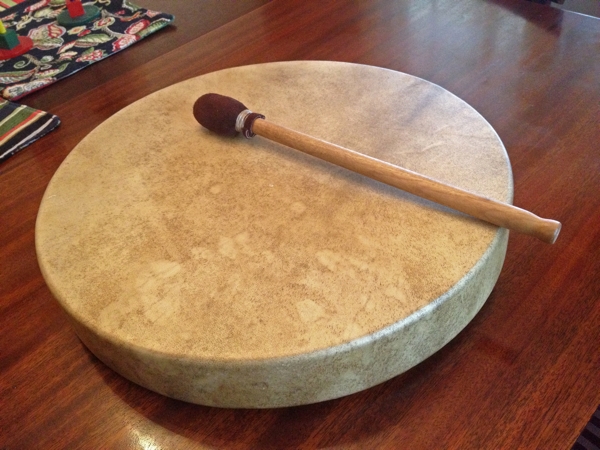
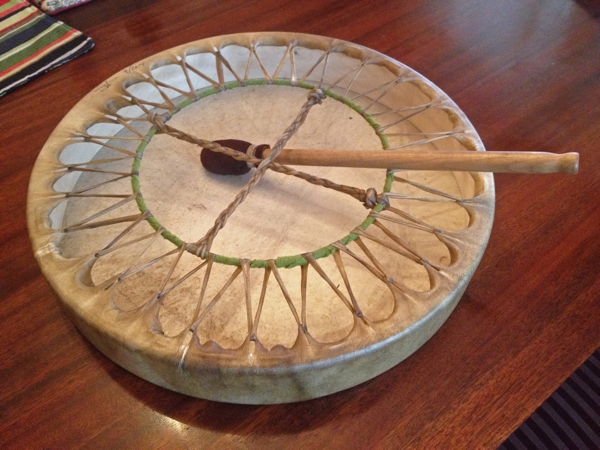
Also for the labyrinth, an 18″ elk-hide drum:

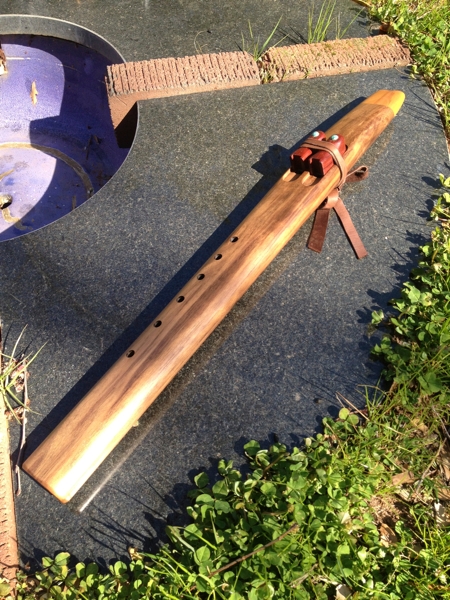
This is from the same artisan who made my flute, Guillermo Martinez.

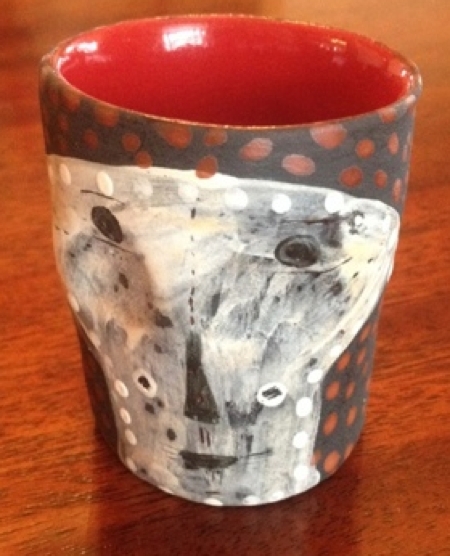
Here’s a fun thing, both for the labyrinth and the bar:

A quirky little tumbler/shot glass, by Jenny Mendes. She had several dozen of these, each incredibly different, each with two faces.

I also got a couple of things not for the labyrinth.

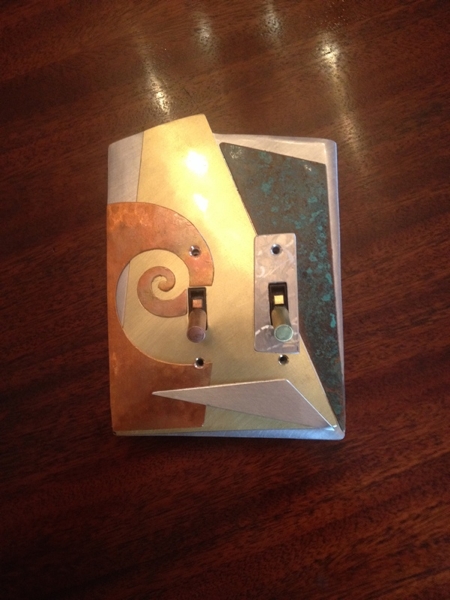
This is a light switch plate by Kevin Loughran.  It’s going by the back door, so in that sense it is for the labyrinth.  For a certain amount of money, we could have replaced every light switch and outlet plate in the house.  (Notice that we also bought the switches…)

And finally:

Aren’t these pretty?  They’re by Gali Chehirian,  handpainted in the verre églomisé process.

The whole show was impressive, much moreso than last year, and I had a great time talking to the artists about their materials and their processes. All of them were super nice and fun to talk to.  Next year, go and see for yourself—but save your pennies: you don’t want to experience leaving something beautiful behind!

And that’s how my weekend went.  Tomorrow, we’ll dive back into Burning Man theory and practice.

Art

No Burning Man today—instead, we travel.  We’ll start out at the High Museum, mainly because we are members but haven’t been in a while.  Then we’ll settle in at the Embassy Suites up at Cobb Galleria for the weekend so that we can take in the American Craft Council show in a leisurely manner.

This is the third year we’ve done the show, and it’s always mindblowing.  Those who have been around this blog for a while will remember my purchase of the large bell for the labyrinth (and its stand when I realized I didn’t have anything in the back yard from which I could safely hang the thing) and of the small sculpture in our living room, Traveling Together.

Last year, I bought a gorgeous Native American flute:

Lovely deep tone, but very difficult to play since the finger holes are in a straight line and not curved ergonomically.

Otherwise, last year, we were a little disappointed to find that the jewelers had proliferated at the expense of other, more interesting stuff.  I bought an earrings for me and a bracelet for my lovely first wife, but there was no art piece that demanded to be purchased.

I’ll have a full report tomorrow.

Burning Man: Labyrinthine elaborations

Having selected a labyrinth pattern to be a part of the 3 Old Men ritual, our next issue is construction.

Remember that whatever we use has to be dragged out into the middle of nowhere, set up, and then struck, leaving no trace.

Despite the fact that a city of 68,000 occupies the Playa for over a week, the Burning Man organization is very protective of the the desert floor.  They have to be; otherwise, the federal Bureau of Land Management will not give them permission to return the following year.  Digging is therefore frowned upon; a turf labyrinth is right out.  Plus, who wants to scrape out a trench in 100° weather?

I’m thinking tent stakes and rope are our best bet, but how will we lay out a circular labyrinth that way?

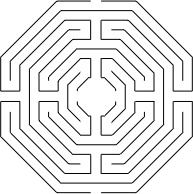
Geometry to the rescue: we will make it octagonal.

… becomes …

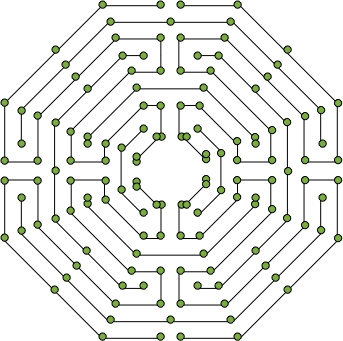
Now it becomes a matter of calculating the number of tent stakes (144) and the length of rope (1900 ft) and how to lay it out.

For the record, it’s 40 feet wide, with the paths two feet across.  The site plan also allows for a ten-foot swath around it for the officiants to stand.

Here’s an image of the labyrinth with tent stakes:

I show this because if you look a bit at the patterns of the tent stakes, it’s not hard to imagine the outline of the Man himself therein:

So that could be a fun thing, outlining the Man with glowsticks or something.  If we had a techwad like Kevin McInturff on board, I bet he could make solar-powered lights that outline the Man in all four directions, fading from one to the other.  Yeah, that would be cool.  But Kevin McIntuff is chicken to go to the Playa and pretend to be a dirty hippie freak with me.  Wait, did I say that out loud?

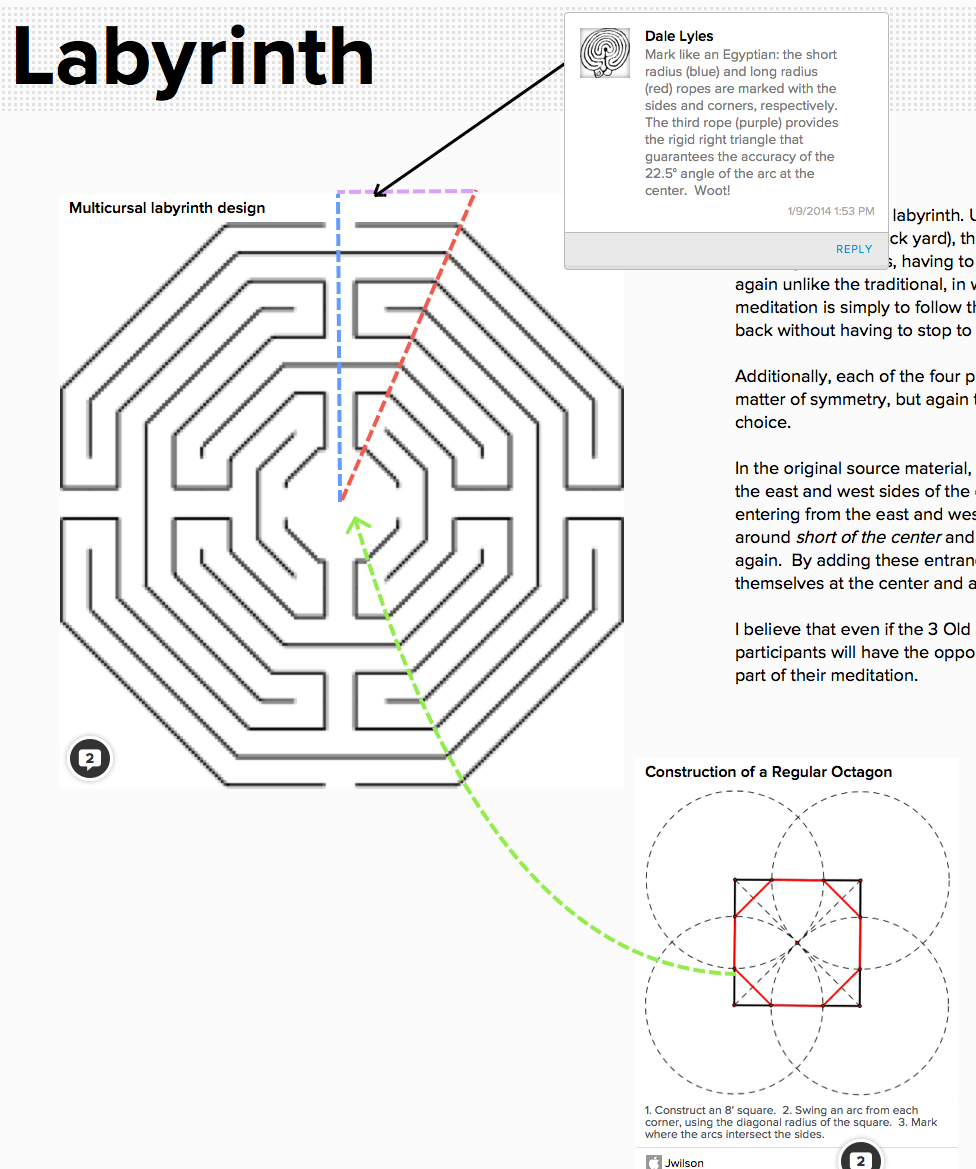
To set the thing up onsite, I’ve devised a plan:

Click to see full size image.

I even have a detailed, step-by-step process to do it, using the 8-foot staves to lay out the central octagon and then proceeding to use the layout triangle to place the tent stakes in an orderly fashion.  The above image, FYI, is from my online workspace at Mural.ly—I highly recommend it as a collaborative workspace!