Arizona, Day 1

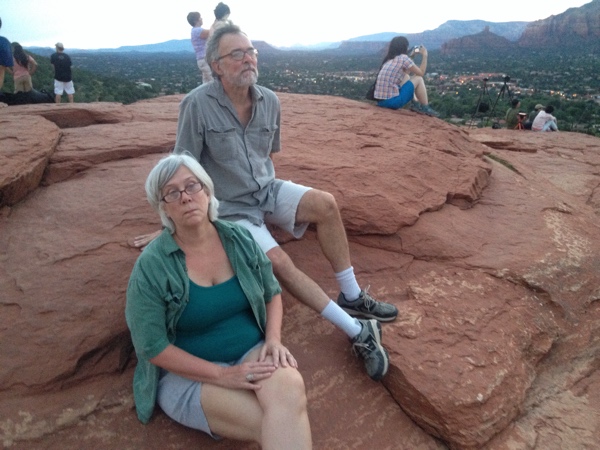
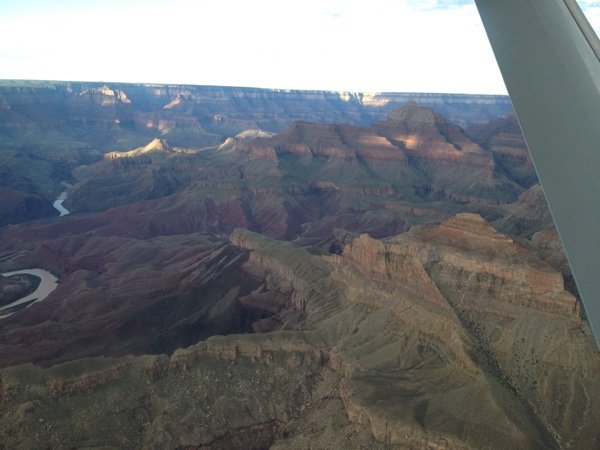
And so we decamped to Phoenix yesterday for a week of sightseeing and spiritual exploration.  (We in this case meaning my lovely first wife plus our friends Marc and MF.[1])

Our first stop was Flagstaff, which has never popped up on any list of places I wanted to go, but it’s quite a cool little city.  The  downtown is like a smaller version of Asheville: hip, self-aware, revitalized and renovated, with shopping evenly divided between outdoorsy types, New Age Woo types, and artsy types.  How odd that these days I’m all three.

We’re staying at the Hotel Monte Vista, which began the downtown revitalization with its renovation.  The rooms are not luxurious, but they’re nice enough, and the bar/lounge is phenomenal—great craft cocktails and great staff (and luscious coffee in the mornings).

We walked downtown and saw several lovely things that we did not buy, a windchime in particular that had a different and lovely sound.  The store was filled with beautiful soundmaking items: bowls and gongs and tubes and even a sound therapy chair in which you sat and thrilled to the deep thrums of the strings on the outside of it.

They are not open today, alas.  If we come back through Flagstaff next Saturday, I’m stopping and making a few purchases.

Dinner was at the incredible Brix, up the hill from the hotel.  We trudged up there to check it out and were there when it opened exactly at 5:00—and they weren’t sure they could fit us in!  Fortunately they could, and it was divine:

In the foreground, shrimp and grits to die for, and behind that, pork belly on polenta with a beet sauce.  From beginning to end, an exceptional experience.

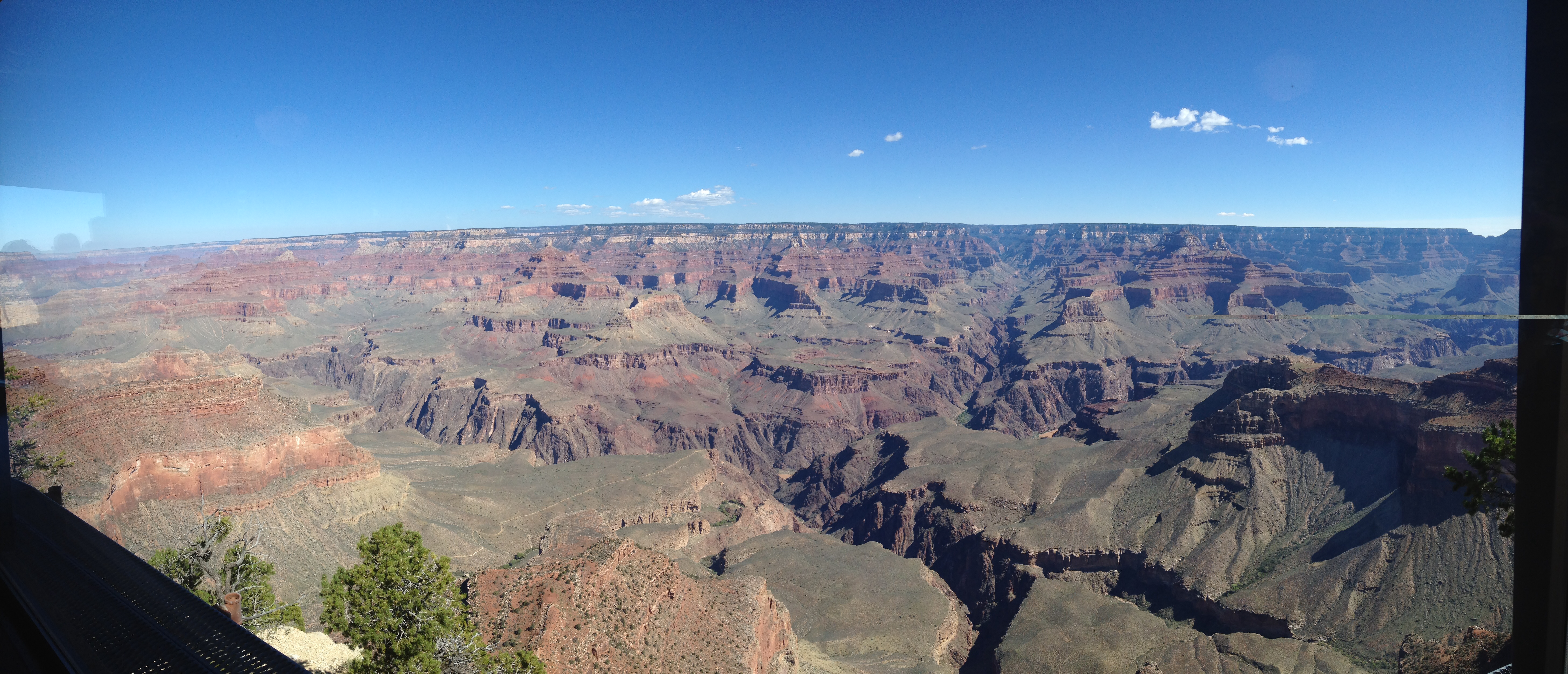
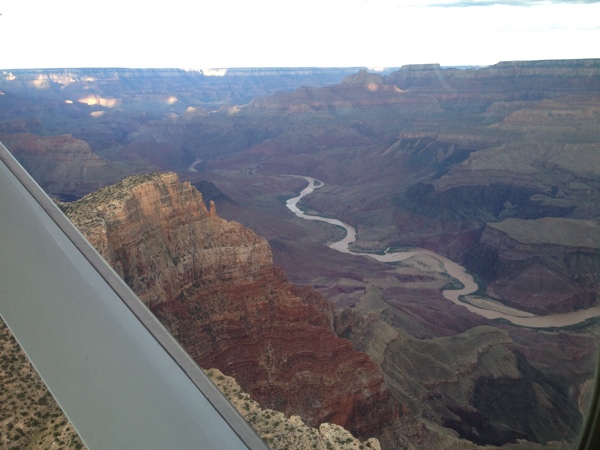
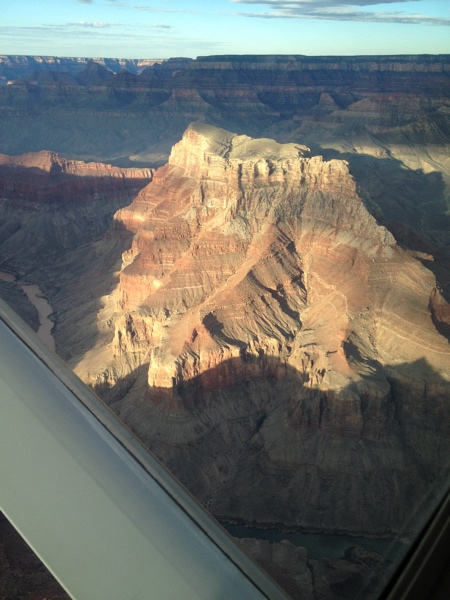
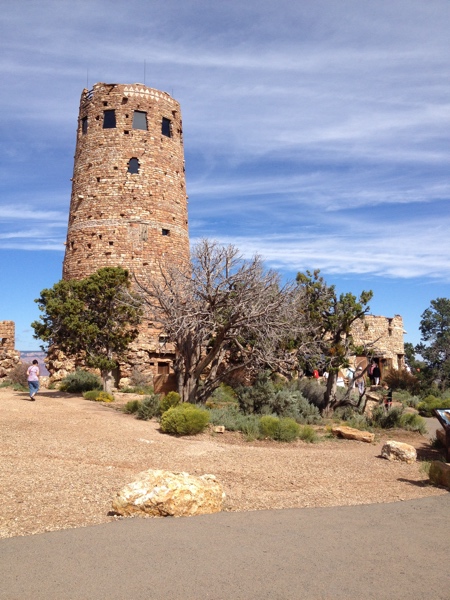
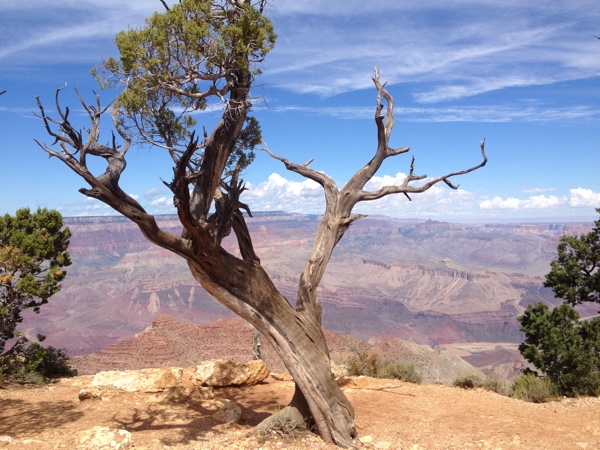
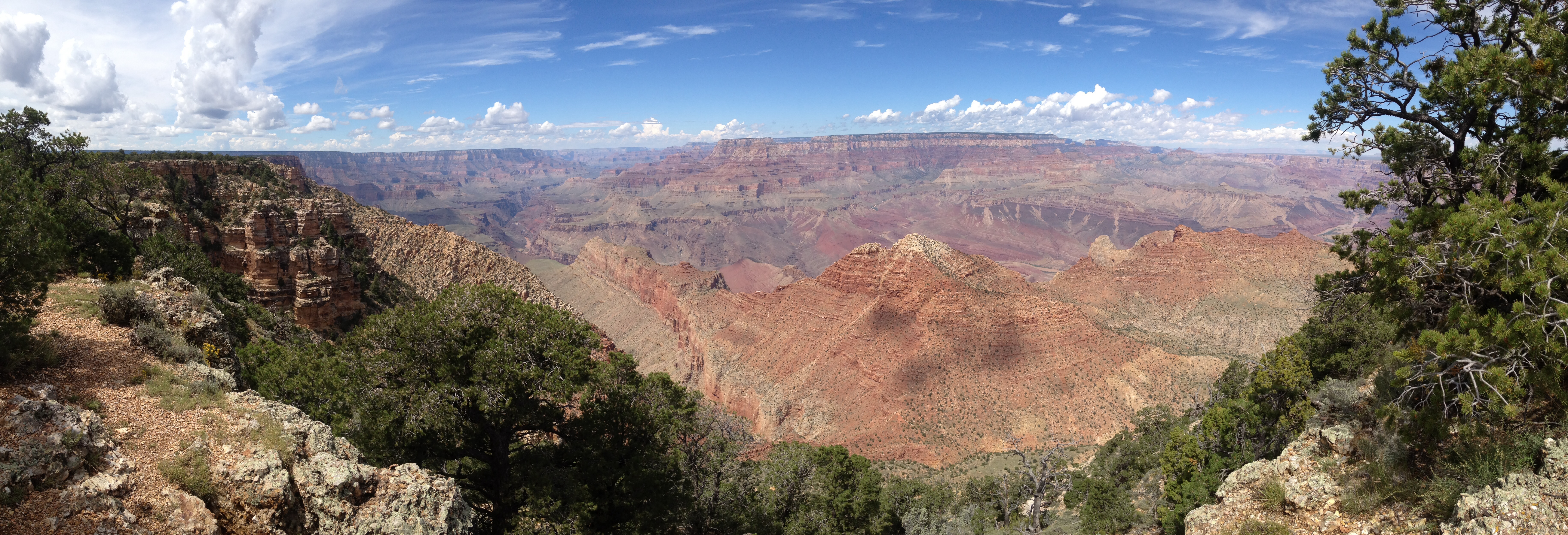
This morning, we’ll hit the weekend art fair here, then on to the Grand Canyon.

We are travelling in style—when Marc got to the rental counter, the best option was an enormous Chevy Tahoe Suburban LT, the most important attribute of which is not its capaciousness but the multiple outlets for charging phones and iPads.
—————
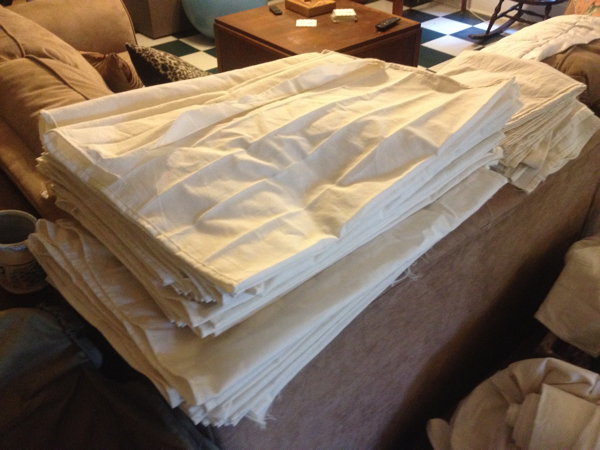
[1] This is the usual disclaimer that we did too leave someone guarding the house so it’s no use planning to break in and steal all the muslin walls for the 3 Old Men labyrinth.  Some of us worry about that.

3 Old Men: Labyrinth walls—the Pleatening

“Dale,” I hear you asking,[1] “I understand that you’ve hemmed six football fields worth of muslin strips…

A football field and a half of handkerchief hemming

“…but how on earth do you do the pleats and create the pockets that the tent stakes slip into?”

I’m glad you asked.

First of all, cardboard templates are your friend. I make mine out of Ram Board, a miracle substance carried by Home Depot.  Every home should have at least one roll.

Here’s what happens.  For every tent stake in the labyrinth I make a pocket, reinforced on each side with a pleat.  When I finish a pocket, I use my handy chart to measure from its center to the center of the next one.  Then I position the template:

Here you can see the center mark:

On either side of the 4-inch pocket, there is a 2-inch pleat.

On the left hand side, things are a little different.  Usually I just mark the 2-inch pleat, but sometimes I have to insert a salvaged piece from an earlier mistake, or I run out of fabric.  Since a bolt of muslin is 25 yards, i.e., 75 feet, and these long walls are 108 feet, this adaptation is inevitable.  We’ll deal with that process in a moment.

Mark the pleats on the bottom and the top, draw lines on either side of the template, then connect the other lines using the template as a straightedge.

As it says on the template, pleat the outside line to the inside line.

Topstitch the pleat on both sides.  I’ve found that it’s easiest/best to topstitch the edge on top, then flip and do the backside.

Here are both pleats topstitched.

To create the pockets, fold the fabric in half and pin both pleats.  Use the other cardboard template to mark two inches down from the top of the pocket.

Topstitch again, this time backstitching both ends of the seam.   This is to keep the stitches from unraveling, of course.  The two inches at the top are for an eventual channel for LD lighting.  That’s right, the 3 Old Men labyrinth will glow in the dark.  It will be beautiful beyond measure.  (I will actually go back and stitch that 2-inch channel across the entire wall, but that may not happen before Alchemy.)

So what about those times when you run out of fabric and have to tack on the next strip? Or where you have planned to insert sections of fabric salvaged from an earlier screw-up of epic proportions?  Here we see my chart of measurements which shows how long each segment of the wall needs to be, plus the ID of each tent stake.  That’s to help me keep track of where I am in the 108 feet.  See the green capital letters?

Those are the salvaged sections, which I measured and labeled:

So when I measure the section before the insert, I mark the left-hand side of the pocket like so:

There’s a 1-inch piece—the bottom of the pleat—then a half-inch section for the seam.  That’s where I cut.

I take the salvaged section and pin it to the wall, wrong sides together:

Stitch it, iron it flat, put the template back into position, and mark the left hand side of the template, i.e., complete the left hand pleat.

The seam allowances are thus concealed within the pleat, and the wall looks as if it’s made from one continuous strip of muslin.

And there you have it.  A long and boring post, you say?  Try doing this process 144 times. Thank you.

—————

[1]  Unless those are the voices in my head. Hard to tell.

New cocktail: the Franco-American

There is, in the inestimable Ultimate Bar Book, a cocktail called The Parisian (p. 200).  It’s equal parts gin, dry vermouth, and créme de cassis.  In other words, it’s a martini with sweetness.

It was OK, but I thought it could be better, and so we now have…

THE FRANCO-AMERICAN

  • 1 oz gin
  • 1 oz Cocchi Americano
  • 1 oz créme de cassis
  • 1 dash lemon bitters

Stir, don’t shake.  (The rule is that if the admixture has citrus juice in it, shake.  Otherwise, stir.)

Cocchi Americano is a vermouth itself, one of those endless parades of aperitifs that will clutter your bar if you start down that path.  It’s very tasty in and of itself.

Not bad at all.  You could lessen the sweetness by cutting the cassis to 3/4 oz, and/or by adding lemon juice.  (But still stirred, not shaken, Mr. Bond.)

It pairs particularly well with a salty goat cheese, which is what we were knoshing on when I mixed this up.

3 Old Men: Labyrinth progress

I know, these are boring posts.  Listen—if I have to sit through six football fields of handkerchief hems, so do you.

Yesterday, I finished — after a tremendous false start — the northeast wall, the first “long” wall, about 108 feet long.  Here’s what that looks like:

Three more to go.  I got started on the northwest wall, but then ran out of fabric.  My new good friends Gary and Cathy Sackett had volunteered to pick up the two bolts of muslin I had, then wash, iron, and cut them into strips, so while I’m waiting on that I decided I would tackle the mat for entrance with the body paint bowl.  (This mat is to catch the spills of kaolin body paint—we’re serious about Leave No Trace.)

My brilliant idea was to make it an octagon the same size as the center of the labyrinth, so I went and got nine yards of 60″ cotton duck (like canvas), cut it in half, and stitched that together.  Here’s the 9×10 foot piece of fabric:

It’s YOOOOGE, as Donald Trump would say.  Or rather, as Wonkette would say Donald Trump would say.

The classic geometer’s tools were the compass and the straightedge, and so I improvised:

Not shown: an old 8-foot piece of 2×2.

Here’s how to do construct an octagon, given a square of the appropriate diameter:

See that in the lower right?  Using the diagonal radius of the square, swing an arc up to the side of the square and mark it.  Repeat.

First I had to construct a square, which is simple, really, just swing a couple of arcs to bisect the center seam and create a perpendicular line, then go from there.

Needless to say, my improvised tools were not quite… accurate.

I eventually got an octagon marked out, but it was very wobbly.

That’s when I remembered that I had a staff…

…which was marked…

…so that I could lay out an 8-foot square and then…

…mark the sides of an octagon.

Duh.

Add two inches around the edges for hemming purposes, cut it out…

…then iron the hems and stitch them down.

And done.

Next up, figuring out the eftest way to secure it to the ground so that hippies don’t trip over it or snag it and topple the tripod with the bowl of kaolin.

3 Old Men: Labyrinth progress

Take a deep breath.

I just finished the SOUTH — OUTER wall.  That’s all the “short walls” done.

Which means…

But never mind that now.  Here’s a photo of it in semi-action:

My poor labyrinth needs rain, reseeding, and cooler weather.  In the meantime, notice the majestic way the wall marches along, especially in the furthest panels there where the stakes are the actual stakes, i..e, tall enough.

Side view:

Again, the panels on the left are being help up by the actual size tent stakes; further along the wall  is being held up by shorter stakes.

I calculated yesterday that for every bolt of muslin that I split in two, I have sewn the length an entire football field in handkerchief/rolled hems.  So far, that’s three football fields, with three more to go.  That’s just to prep the panels so I can then pleat in the pockets for the stakes.

Likewise, I have used over 20 football fields of thread so far; that will probably end up being closer to 50 than not.

Onward!

3 Old Men: Labyrinth upgrade progress report

You will recall that I received hippie funding to upgrade the 3 Old Men labyrinth from this…

…to this (artist’s conception)…


I am here to tell you that while the sewing is not difficult, it is tedious in the extreme.  I am blogging at this moment in order to avoid going downstairs and prepping yet another bolt of muslin for washing, cutting, and hemming.  Yes, that’s right, I split an entire bolt of unbleached muslin in twain, then handkerchief-hem both sides of both strips.  It takes an hour to do each strip, mindlessless folding 1/4″ hems and stitching them down, yard after yard.

Then the actual sewing starts.  I’ve been working a couple of weeks, off and on, and here’s where I am as of yesterday afternoon:

Oy.

What you see there is about two bolts of muslin.  I bought two more yesterday, and they might be enough to finish the four long walls.

I keep talking about the “long walls” with dread and horror and I’m not sure everyone understands what I mean.  Here is one of the long walls:

It’s over 100 feet long, and it’s one of four.  And while the lesser walls are all symmetrical and made of panels of identical size, the long walls are a mishmash of lengths as they meander inwards across the octagons, ending with those little 9″ panels at the inner entrances.

Oh well.  I knew the job was dangerous when I took it.

Back to work

Last year I wrote “Horsefly Rag” for my friend Mike Funt, who is as far as I know a world-famous clown.  At least that’s what his letters from his Asian tour indicate.

He finally got around to thinking about using the piece, now that he’s famous in Tokyo and all, and, as I thought all along, we need to add more to it to make it a viable clown piece.  I had actually left an entire measure rest in there specifically for the purpose of inserting another segment before the big finale.

He felt that as well, but also wanted an introduction to bring us into the piece, or in his words, “As though the fly is just waking up and kind of stretching [and] moving into his day.”  He suggested the opening of Rhapsody in Blue as something that would please him.

With that in mind, here’s our first pass at the opening:

Horsefly Rag, now with intro | mp3

My music

As I’ve mulled over what I want to do when I grow up, more and more I keep thinking that I would like to be a composer.  True, I’ve been writing music for a long time, but for the most part no one’s been performing it. It seems to me that if I want to be an actual composer, then someone should start playing my stuff.

To that end, and having read Amanda Palmer’s The Art of Asking, I have started putting out there that I would appreciate the universe’s cooperation in getting my music performed.  This is not the same as the occasional competition that I might enter; this is pointblank asking my friends and acquaintances to take a look at my stuff and to keep it in their minds that they have a friend whose music is available for performance: church choirs, high school choirs, community choruses, chamber groups, soloists, orchestras.  I’ve done it all, although not at any level of output like a professional composer.  As I recently said to an old friend, I’m not untalented, but I’m untrained—I don’t work quickly.

Am I working on anything at the moment?  Yes:

  • A Christmas Carol has to be revamped: reorchestrated and exported into sound files that can be sucked up into QLab for rehearsal and performance this December at Newnan Theatre Company.
  • “Horsefly Rag”: Mike Funt has asked me to add a slow opening and a slower interlude before the big finish.
  • Seven Dreams of Falling: I will be getting back to work on the Minotaur’s “Rip me from this darkness” aria.  Soon.  Ish.
  • Five Easier Pieces:  I’m going to finish that before the end of this year.  I am.

So what are you waiting for?  Go check out my stuff.  And perform it.