An interesting IP scenario

In our topic today, ‘IP’ stands for ‘intellectual property,’ i.e., copyrights, patents, all those kinds of things that are not physical property but which are protected by various laws and lawyers.

Mostly lawyers.  Have you ever tried using a Disney character for some purpose of your own?  Try it sometime.  Leave the number of cease & desist letters you get in comments.  (For a saucy explanation of copyright protection and fair use of copyrighted materials, see:

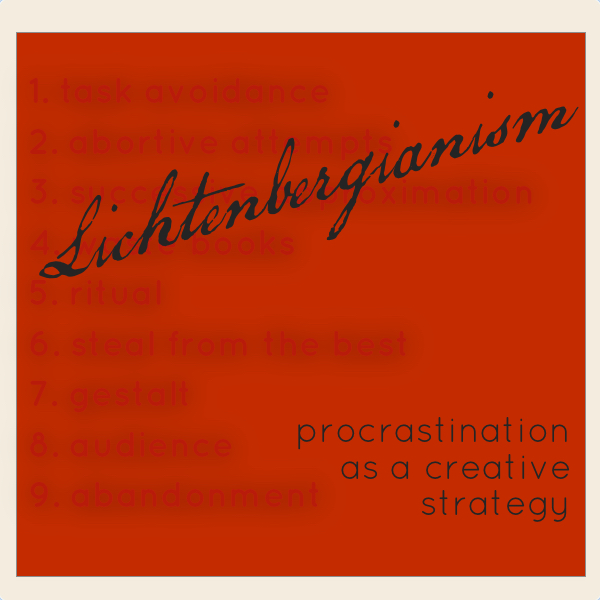
So here’s my interesting scenario.  I’m working on Lichtenbergianism: procrastination as a creative strategy, and I’m clipping right along at about 1,000 words per day thank you very much.

As I work, I’m collecting examples, images, quotes that support the Nine Precepts.[1] As I do so, I am quite aware of whether or not I will have to seek permission from a copyright holder in order to use those items in the book.  (I am aware mostly because Dianne Mize, in a letter describing her progress with her editor/publisher for Finding the Freedom to Create, described several roadblocks in finding a translation of the Tao Te Ching that she was allowed to quote from in her book.)

For the most part, I’ve used materials that are either in the public domain or have a Creative Commons license.  Direct quotes are cited fully in footnotes and bibliography and so fall under fair use.[3]

But today, in discussing the precept Steal from the Best, I directed the reader’s attention to Picasso’s Les Demoiselles d’Avignon and explained how a good artist would “copy” the African masks which inspired part of Picasso’s painting (leaving them and our world unchanged), while Picasso, a great artist, “stole” the masks, changing both them and our world in the process.

I know for a fact that there are usage restrictions with the Museum of Modern Art’s image, because their website says so, right there on the painting’s webpage along with a link to the company that handles licensing for MOMA.  For such a small scale work as Lichtenbergianism is bound to be, I figure it cannot be worth even a small sum to secure the rights to the painting’s use.

So I’ve linked to it in a footnote.  The reader who is unfamiliar with the work can put that URL into the browser and see the painting immediately.

Will I have violated copyright law by doing so?  This is an interesting question to me.  I haven’t reprinted their image without permission.  I have referenced it, and I’ve provided the information for my reader to find it, and in fact I’ve benefited MOMA by driving traffic to their website.  But it could be argued (in court…) that I have used Picasso’s Demoiselles as an illustration in my book: the reader simply opens up the webpage and then reads along in Lichtenbergianism with the painting there before him.

updated to add: Moreover, it could be argued that I intended to illustrate my book with MOMA’s image, that if it were public domain or CCC-licensed, or if I had had the funds to license it, I would have included the image. (Why am I contributing to the unraveling of the Commons here by doing their lawyers’ work for them??)

The floor is now open for comments.

—————

[1] It occurs to me that I have not blogged specifically about the Precepts of Lichtenbergianism.  Tomorrow, perhaps.[2]

[2] That was a joke.

[3] The biggie is the book of Lichtenbergian aphorisms from which I pull quotes.  My use of them exceeds fair use, and the translation I’m using is definitely copyrighted.  So I see a couple of exchanges with R. J. Hollingdale in my future…
Lichtenbergian goals, 2016

It’s time now to post about my Lichtenbergian goals for 2016.

As I’ve discussed before, the process of deciding what my goals will be for the coming year is a serious thing. I don’t want to overload myself, but neither do I want to be the guy who shows up at the Annual Meeting having accomplished all his goals. That would be gauche and liable for Censure.

I will have to say, though, that this year’s choices were tough, as I’ll explain below.

Lichtenbergianism

First and foremost, of course, is to finish Lichtenbergianism: procrastination as a creative strategy, the book explaining the Lichtenbergian approach to the creative process. If we presume a word count of 25,000 words, I’ve written a little over half of them, i.e., the easy part.

Now I have to go back in and smooth things out—make sure that I’m not falling into the “ignorance of knowledge” trap, over-assuming my audience’s contextual understanding of what I’m talking about. I need to keep refining my idea of who the audience for the book is. I need to start making sure it flows and doesn’t just lurch from topic to topic.

3 Old Men

Once again, I want to expand our theme camp to include the “yelling at the hippies” area. Brief recap: it’s a 50-foot square defined by our old ropes and tent stakes, with a tall chair (like a deer stand) on one side. One of our camp sits in the chair with a megaphone and shouts instructions to any hippies who have gotten inside.

These instructions include contact improv/InterPlay/Twyla Tharp kinds of movement and play, so that we have an impromptu performance of sorts.

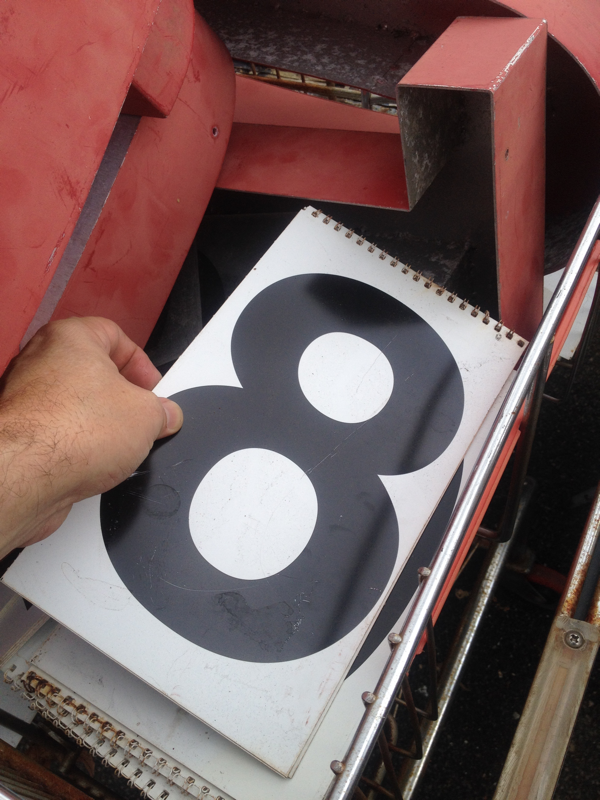
Recently, at Scott’s Antiques, I came across these:

Carefully labeled FOR OUTDOOR USE ONLY, they’re sturdy plastic flipcharts for scoring events, and they were only $1 each! Suddenly our arena got more interesting—we can put up three to five chairs on the sidelines where hippies can choose to sit and score the efforts of the performers. This has led to the description of the project as “ludicrous totalitarianism, with judgment—but in a good way.”

Part of the project will be to compile a list of commands that will create a neat-o experience for participants and for onlookers. That should be fun.

I also want to continue working with Flashpoint Artists Initiative, the nonprofit which runs Euphoria/Alchemy, as a small-time volunteer on various projects.

Backstreet Arts

Local artist Kim Ramey has a vision to establish a venue for an art studio for homeless/underserved populations here in Newnan. I want to become more involved in helping that to become a reality.

My personal agenda is to provide within the facility a space for writing and publishing, as exemplified by Temporary Services in Chicago. As Kim wants to provide a place for people to “do art,” I want to help people to tell their stories.

???

For lack of a better word, I’m calling this the Undefined Universe Project.

I was actually stuck on deciding what else to do for a goal, and here’s why: after years of writing music that has never been performed, I just didn’t have the spirit to attach myself to Seven Dreams or to SUN TRUE FIRE again,[1] nor to start Simon’s Dad or anything else new when I know it’s not going to get performed.

I know full well that that’s part of being a modern composer, just writing your heart out and then hitting the pavement to try to sell it. And I’m going to work more on that aspect of the business, both for the music and for Lichtenbergianism. But in the meantime, I want a little validation, you know?

So my goal is to allow the Universe to send me a project which is attached to actual production. I will help it along by putting myself and my work out there (#playdalesmusic, anyone?), but I’m going to start by using my woo skills to put the Universe on notice that I’m open and receptive.

I’ll keep you posted.

—————

[1] Which is not to say that I won’t be futzing around with those pieces or even something new, just to keep myself flowing.

Lichtenbergian goals from 2015

Hi there!  I’ve been busy getting A Christmas Carol on its feet, so apologies all round for the lack of fabulously interesting content around here.  But now the Lichtenbergian Annual Meeting[1] is upon us and I must take a look back to see how well I’ve done on my goals for this past year.  Let’s take a look, shall we?

Seven Dreams

Nada.  After I finished Dream One last year, I was waiting on my librettist, C. Scott Wilkerson, to provide more text for our opera (based on his play Seven Dreams of Falling, a retelling of the Icarus myth).  Alas, he’s been caught up in finishing his PhD, so I twiddled my thumbs.  There were some abortive attempts to set the opening and ending of Dream Three since I knew what it was going to be, but I failed utterly to crack that nut.

3 Old Men

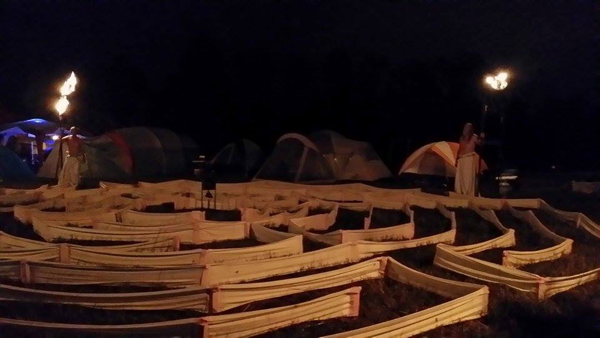
Check.  My goal was to expand the camp, which we did but not in the way I originally intended.  As documented here, I constructed fabric “walls” to go over the tent stakes of the labyrinth, replacing the yellow rope and improving its looks quite some.  We also added some really cool new Old Men to the camp, one of whom brought fire art to the entire concept.

Five Easier Pieces

Done! I can check it off my list, where it has been for at least two years.

Christmas Carol

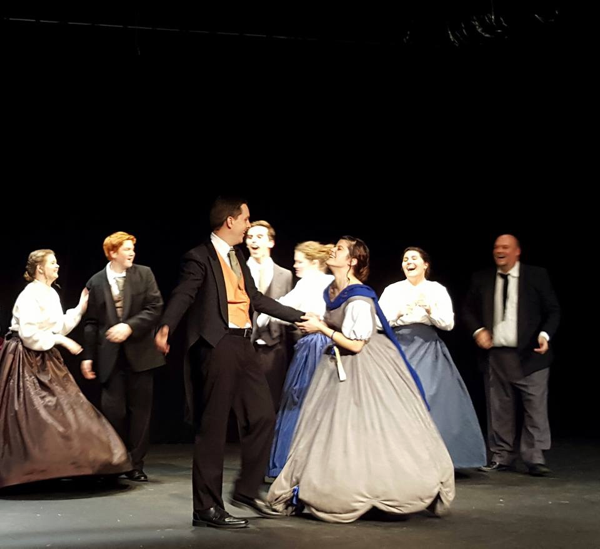
My goals for Christmas Carol for this year were a) finding an affordable software music sequencer that works like the old EZ•Vision sequencer did; b) learning to use it; and c) completely rescoring Christmas Carol again with a full orchestral accompaniment.  And d) directing the show.  I did it all and infinitely more.

SUN TRUE FIRE

It remained a back burner project.

design & construction of labyrinths

Not a major goal to begin with, I designed two labyrinths for “clients” that ended up being unnecessary.  Still, a pleasant diversion.

general work habits

This one was a success—I re-established a daily routine that worked for me and actually was more productive than the short list above would indicate. The principles of Lichtenbergianism teach us that having goals is important even especially if they only serve to provide reference points to avoid, and that’s what happened here.

Next…

Lichtenbergian goals for 2016—let’s see what comes out of my mouth at the Meeting.

—————

[1] For those just joining us, the Lichtenbergian Society is my group of friends who support each other in their willingness to procrastinate their way to creative success.

Easier Piece #5: another update

Soooo close…

The end is particularly wonky, but I can’t decide if it’s dazzlingly kaleidoscopic or just inept.

Easier Piece #5 (12/17/15): mp3

update:  Oops, I finished it.  (Minor futzing, and a tweak to the ending.)

Originally, I intended the piece to be a nocturne, a dreamy quiet  finish to the five pieces, and definitely more Arvo Pärt than it turned out to be.  Oh well.  I suppose I could make it Six Easier Pieces, but then I’d have to put it on next year’s Lichtenbergian goals.  Not going to happen.

I’ve left a lot of the articulation of the moving parts to the pianist, although there are a couple of deliberate staccatos in there that anyone who plays this should feel free to ignore.

Now, are these pieces actually easier to play?  Compared to Six Fugues (no preludes) they are, but are they in fact objectively five easier pieces?  Someone who can actually play should play them and tell me.  #playdalesmusic

Five Easier Pieces: No. 5 (Sonatine) | score [pdf] | mp3

Five Easier Pieces, an abortive attempt

I don’t know when I became averse to posting my abortive attempts, but I think it’s true that I have.  I’d like to be generous and say that it’s because I like to surprise and delight my readers with a finished product, but the truth is probably closer to the fact that when what I’m working on is a deliberately “simpler” piano piece that will probably be only two minutes long, I don’t want anyone to know how ineptly I struggle with hacking my way through it.

I’ve whined before about not being able to play the piano and how it hampers my growth/expertise as a composer, and never has that been more true than with these bagatelles.  (Another whine: my USB keyboard is extremely unreliable inside Finale, and today even playback volume became quirky.  There’s an upgrade, but I can’t apply it until Christmas Carol is over in case it borks everything, which is what happened several upgrades ago.)

Oh well.

Here’s “Easier Piece #5” as of today: mp3 (only about 30 seconds of music; the rest is blank measures that I will fill up.  With genius.)

<ETA> Here’s what I like about the piece so far: I like the way that the moving parts feel as if they are not bound by a specific meter.  It sounds like it’s trying to be a waltz, but the bass line won’t cooperate.  I like the almost clichéd fillip at the end of the main melody.  I like the potential of the second theme, and the work I’ve done on the piece since posting this morning leads me to believe that it will end up as a sonata allegro.  More later.

Christmas Carol: Overture!

Here’s something you haven’t heard in nearly fifteen years: the Overture to Christmas Carol.

You may recall that last year, I labored for half a year to reconstitute the score for a small ensemble which never materialized.  None of the original computer/MIDI files existed any more, and so I had to work from my original handwritten piano score.  This was not a problem.  But the overture was never written down—I composed it directly in the computer using the sequencing software EZ•Vision (which no longer exists.)

I was going to have to recompose the piece from the ground up, although I had a pretty firm idea that it consisted of the Christmas Waltz, 20 Questions, and People Like Us.  Since the music I wrote last year never got used, I was gratified that I didn’t put the effort into the overture.

This year, though, I wanted my overture back.  I cobbled together the opening by copy/pasting the Christmas Waltz, then pieced together the 20 Questions sequence—and then I just laid it to the side and ignored it for months.  This week, though, since we open a week from tonight, I figured I’d better get in there and finish it.[1]

Today, I opened it up and began working, and by lunch I was mostly finished. Bits of “A Reason for Laughter” sneaked in, and I quite like that section—it’s definitely my recent style as opposed to my 20-something self.  The final half is a neat orchestration of the “People Like Us” canon, and while it resembles what I remember from 20 years ago it, too, is more of my recent style.

The rest of today has been Successive Approximation all the way, as I tweaked and added and subtracted—then after premiering it at tonight’s rehearsal, I heard tons more that needed fixing. Tomorrow, I’ll probably futz with it again, but for the moment, Behold! An Overture!

Christmas Carol Overture | mp3

—————

[1] The other impetus was that I discovered yesterday that I have to gear up and supervise the construction of almost all the gowns in the show.  In a week.

Lichtenbergianism: some progress

I have been surprised at my assiduity in writing Lichtenbergianism: procrastination as a creative strategy.

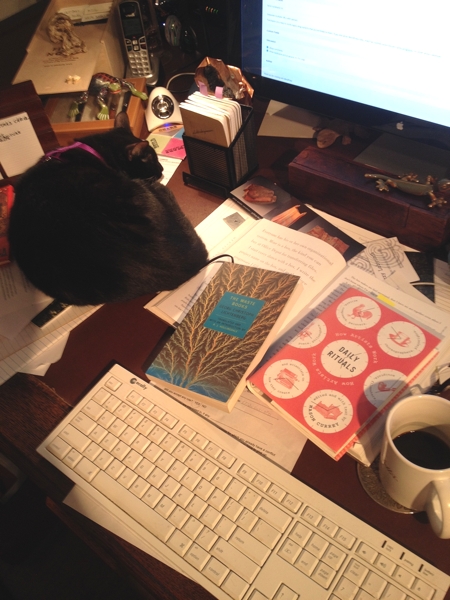
Here you can see that I have all that I need:

  • computer
  • coffee
  • reference works1
  • Assistive Feline™
  • new agey Pandora station (not shown)

Thus girded, I have written and written and written.  If I have a goal of 25,000 words total, I am 370 words short of being halfway there.

I know this because Scrivener, the authoring software I’m using, allows me to track my progress.  I’ve set a putative deadline of April 12, 2016, which is totally arbitrary of course, but the fun thing is that if I click the little “calculate session goal from deadline” thingie, then I only have to write like 130 words a day.  Pfft.  After allowing myself to revel in the idea that this is a really doable goal even for a Lichtenbergian, I turned it off and went back to a still-modest 500 words/day.

Still, today I knocked out more than 800 words, and that’s not bad at all.  I may be up to 1,000 by the end of the day, should I decide to keep writing rather than making cookies for Fuzzy Labyrinth holiday sales.  Or reading more on The Gift, an influential piece of work on my thoughts about creativity.

—————
[1] I begin to realize the daunting task ahead of me in obtaining permission, even in a research setting, to use other people’s work in mine, particularly Georg Christoph Lichtenberg’s aphorisms as translated by R. J. Hollingdale.

Lichtenbergianism: a realization

I was mulling it over and thinking that I want Lichtenbergianism: procrastination as a creative strategy to be a relatively short book.  I mean, it’s not a weighty philosophy to begin with, so I’m thinking it ought to be about the same length as Art & Fear.

So this afternoon I took my copy of Art & Fear out to the labyrinth to do a quick estimation of the word count and came up with about 34,000 words.

Well.

I already have 9,800 words just from transcribing my notes from the Waste Book [Precept #4].  Without even getting started, really, I’m anywhere from a quarter to a third of the way to my goal.

Cool.