Winter break: Day 5

I’m posting this a day late because I was out of town during the evening.

Spent the morning finishing up the herb garden. After the Revolution, I will always buy exactly the correct number of bags of mulch. I will not have to return to the store to buy more, and neither will I have two bags left over after I have done so.
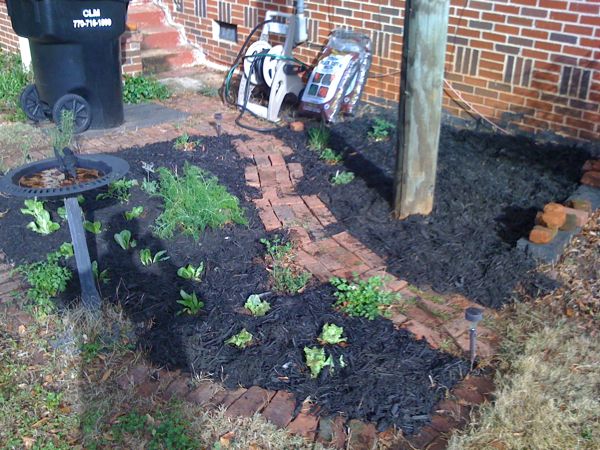
Notice the two bags of leftover mulch.

Survivors from last year: rosemary, dill, parsley, chives, and two or three cilantros. New plants: oregano, sage, thyme; arugula, Romaine, Bibb, and red leaf lettuces. Still to come: basil, tarragon, maybe some mint, and lemon verbena.

I made the mistake last year of not mulching, which meant that I spent four hours tilling the place up and then laboriously pulling the grass out by the roots. Two huge piles of detritus to the curb.

Since it rained the night before, the soil in the labyrinth was soft enough to rake through and scatter seed.
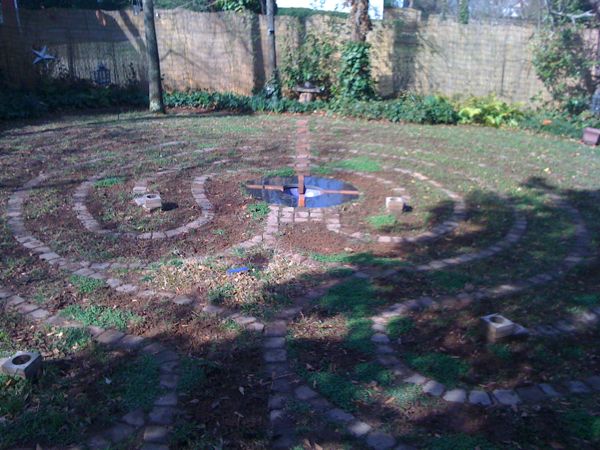
I’m a terrible lawn maintainer. When I say “reseeding,” I mean, “scatter some seed onto the raked, slightly disturbed soil and hope for the best.” I do water it, but you’re supposed to till the soil to a depth of 1 to 2 inches, then scatter the seed and rake it under 1/4 inch. Hello?

At this point, I’m hoping the oxalis takes over. It grows like the weed it is, it’s pretty, and it’s soft underfoot.

I had formed the impression that it was going to rain all day on Friday, so I put off all serious work on the cello sonata until then. Oops.

I have at least formed some opinions. I talked about using the chromatic motive as a building block, but I am also considering a cello solo for the second movement; give the pianist a moment to rest the weary fingers before that third movement. And I think I’ve reached a major decision about the third movement, after doing the obsessive listening thing in the van while running errands this week. Currently, there’s this gorgeous rush of sound that kind of blooms forth, then finally calms down to a halt and a calmer midsection.

It has made sense structurally, in that the first 1:20 there’s no place for the audience to breathe. It seemed to be exhausting, and my instincts were to bring all that rush to a close and to provide a more static interlude before picking up the quintuplets in the piano again.

However, what if I didn’t do that? What if, at the 1:20 mark, I gave the spheres another spin and kept us going through yet another rushing passage, building and building until the whole thing just explodes in ecstasy? I can keep that interlude material for another piece. (Yes, I already have notes on a second cello sonata, including the AFO sketch Labyrinth in Snow.)

Comments?

Winter break: Day 4

I didn’t blog yesterday, because by the time I got inside, showered, cooked dinner, etc., the intertubes were clogged. They were still clogged this morning. This is the first chance I’ve gotten to catch up.

Yesterday, I rooted out the old grass in the herb garden. That took all morning and half the afternoon, but it’s now beautiful: stripped back and tilled, ready for new stuff. I was ruthless in pulling out old plants that were puny. Circle of life, etc., etc.

In the later afternoon, I moved back to the labyrinth, meaning to till the bare patches and reseed the whole thing. We found some grass seed that swears it’s for “deep shade.” I’m going to mix that with some fast-growing stuff, and hopefully by the Equinox we’ll have green lushness again.

However, the bare patches of soil were rock hard. This is part of the problem, that the topsoil I used had little organic matter in it, and had enough clay to turn to brick if left to its own devices. You would think that six different plantings of grass would have provided plenty of dead organic material, not to mention all the mulch-mowed leaves over the three years, but you would be mistaken.

I finally had to take a hoe and just chop little dents in the thing. I gave up about halfway, resolving to wait until it rains tonight and try again on Friday or Saturday when the rain has softened the earth a bit. If not, I’ll water the whole thing and proceed from there.

No work on the cello sonata, although I have decided to go download the slow movements to Bach’s Unaccompanied Cello Suites and study them a bit. It wouldn’t be bad to have a solo slow movement.

Today, I ran a gazillion errands: mulch, hardy herbs and lettuces, a VGA adapter for the iPads at school (so students can project their work onto the smartboard), etc. While waiting for the Apple store to open, I ducked into Barnes & Noble and browsed the art books.

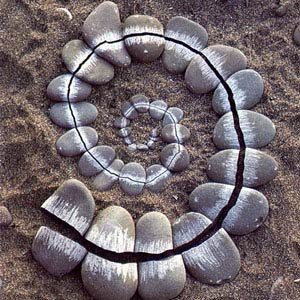
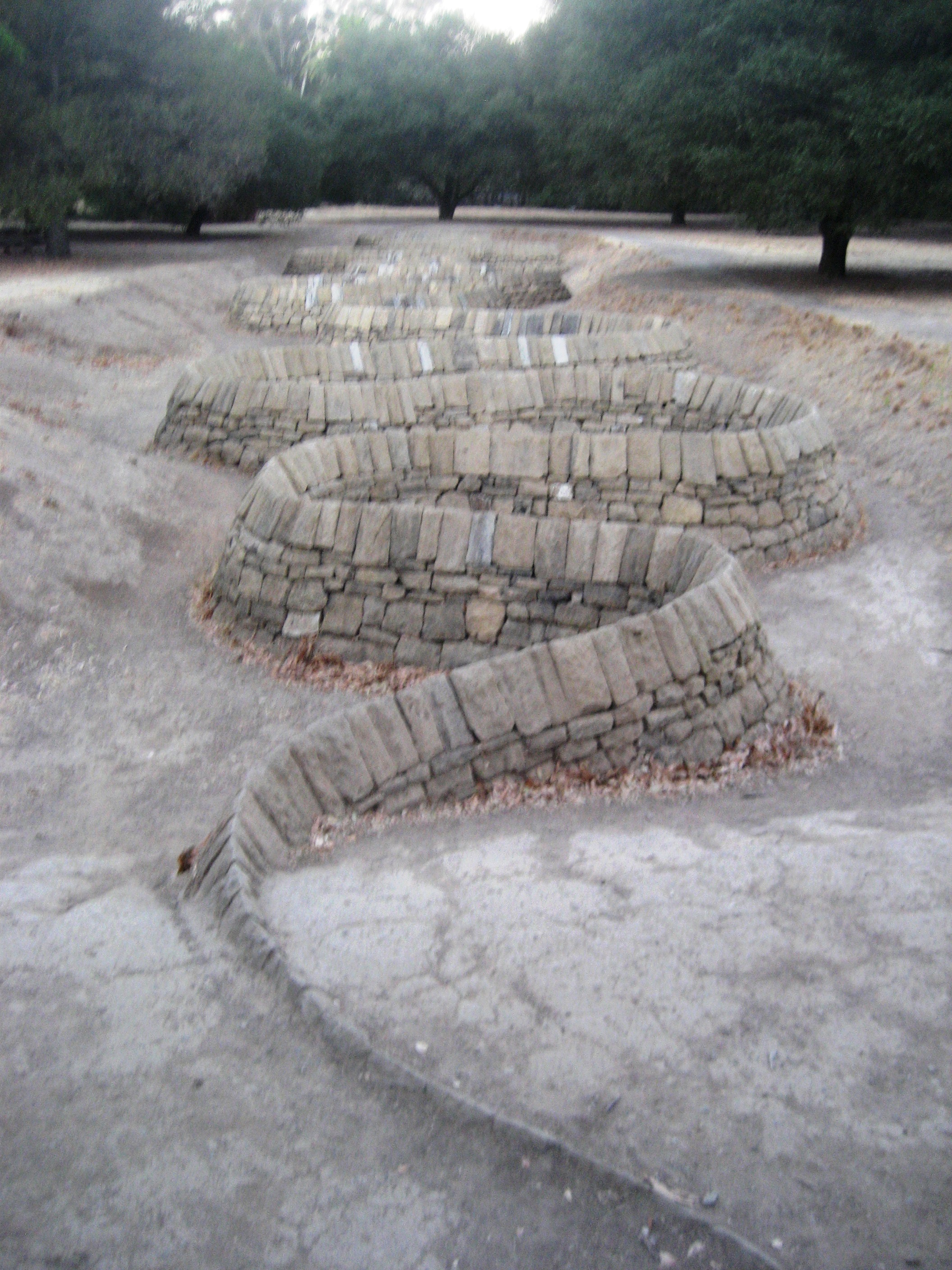
Andy Goldsworthy. (Also here.)

First, some images of his stuff, in case you’re too lazy to explore his website.

You get the idea. Gorgeous stuff, and he works only with the natural materials to hand: no nails, no glue, no high tech monkey business.

Anyway, I came across this book:

Ooh. Also Ah. Some gorgeous (and massive) stuff, newer than in the books of his works that I already own. (That was a hint.)

It triggered some thinking about the northpoint of the labyrinth. The element of north is earth, and I’ve done a small work there in the bank:

It’s vaguely yonic, with the bare earth opening in it. Not very defined, and the problem is that you can’t see it really from anywhere but standing right over it in the outer circuit.

You see the problem. The other points are clearly visible from anywhere in the labyrinth, and especially from the center.

So I’m thinking I need to pull an Andy Goldsworthy on the northpoint. I could construct something past the yonic pile against the fence, or put something there right at the border, something that stands. This requires some meditation.

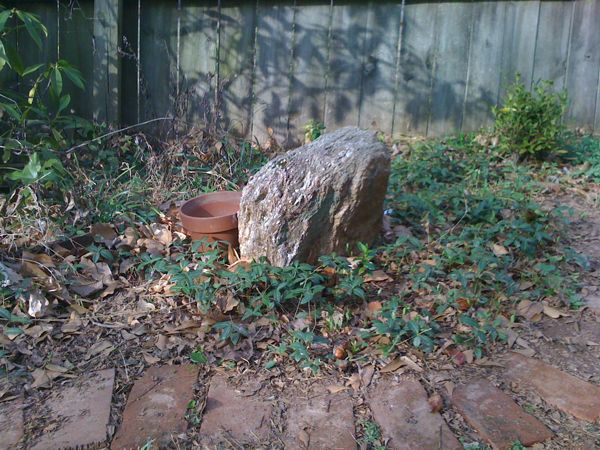
I do have this stone:

It’s in the upper lot, next to where the “dance patio” is planned. It’s actually the first bit of “mythic landscaping” I did in the yard, years and years ago. I’m now thinking it needs to move to a place of importance, and stand there at the northpoint like the standing stone it is.

Any comments?

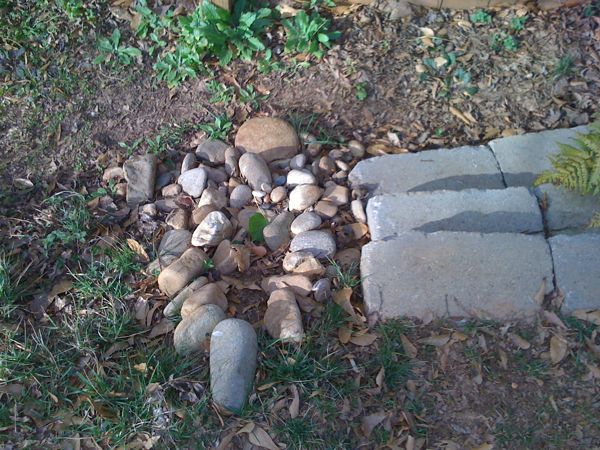
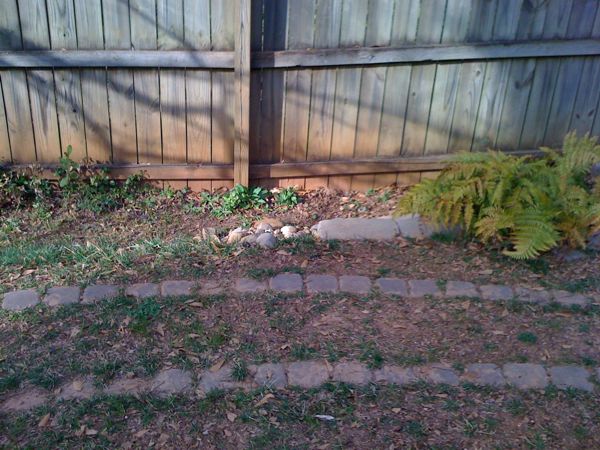
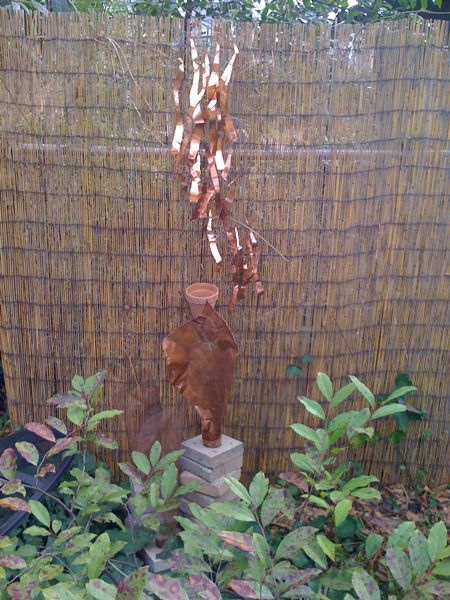
In other news, I have played with the southpoint in recent days:

It’s more impressive than it looks.

Winter break: Day 2

After running some errands, I settled down after lunch for some meditation and composing in the labyrinth. The sun once again has cooperated.

Today, I sketched out what I thought would be a pretty woeful theme, only to have it turn out to be a theme already on the books. I think it’s a Schumann symphony. Its exact identity is eluding me, but I know it’s not mine.

I revisited what I sketched out yesterday, and I developed a plan, if not a theme. Yesterday’s work included a tiny chromatic bit, inching upwards through the scale. Very short, and it labored, petering out al niente.

My thought was to use that as a building block, starting from silence and having the cello struggle with it, over and over, back into silence. The piano joins, layered and canonic, and we get a thick texture of these little tortured wormlets, crawling up, dying off.

When that’s satisfactory, I want to have the cello reverse course, sliding inexorably down through the wormlets, until we reach the ending I’ve already written, a crushed morass of chords at the bottom of the piano.

Sounds lovely, eh wot?

Last night at Masterworks practice, Viva Voce went over “Make Our Garden Grow,” from Bernstein’s Candide. I love this piece. For those who don’t know the show, it’s the finale, when Candide and his ladylove Cunegonde end up outside Constantinople (I think; versions differ) and he finally puts his foot down on any more “best of possible worlds” thinking. We will eschew the entanglements of philosophy, he says, and till the good earth. We’ll make our garden grow.

The piece is gorgeous, a full-throated paean to minding your own business and taking care of life. “We’re neither pure nor wise nor good; we’ll do the best we know. We’ll build our house and chop our wood, and make our garden grow.” The suspensions and resolutions at “garden grow” alone are worth the price of admission.

That concert, by the way, is Sunday, March 13, 3:00 pm, at the Centre for Performing and Visual Arts.

The role of Pangloss is one I’d love to play before my voice gets much older, and it seems to be getting older by the minute. (Tautology, I know.)

Winter break: Day 1

I think I’m going to force myself to write every day this week.

Today was the first day of the school system’s winter break. Weather was pleasant, most pleasant in the afternoon, and I took advantage of that, as I will describe in a moment.

This break kind of sneaked up on me. We had the week off in January because of the ice, and there’s been all the excitement of getting the iPads in and getting them up and running, plus other distractions, and I mostly forgot that I was about to have a whole week off with no real responsibilities. At the eleventh hour last week, so to speak, I decided on a couple of tasks I might work on.

One of course is the cello sonata. I have avoided working on it, because I have no real ideas for the second movement. So this week will be dedicated to straining out stuff that’s awful. Like horrific. Like you will never hear it.

Of course there are things to do around the house, so I made a list. On Saturday I raked out the labyrinth and tidied it up for a Lichtenbergian gathering. I need to write about that over on the Lichtenbergian site.

Today I raked the front yard and did some maintenance on the landscaping across the front, clearing out the dead stems and stuff so that the green can burst forth, which it is already beginning to do. I put off truly revamping the herb garden, but I also cut back all the dead stuff and pulled up plants past their prime. And trimmed that rosemary bush! Why is it that the herbs you rarely use grow like weeds?

I finished reading Wolf Hall, which is an amazing, amazing book. It’s a novelization of the career of Thomas Cromwell under Henry VIII, and it’s a dazzler. I cannot recommend it highly enough. It does not cover his entire life, stopping at a significant moment, so perhaps there will be a sequel. I’d be delighted.

I’m also determined this week to meditate more seriously. I went to the labyrinth and sat in the sun and meditated for ten minutes. I was not very successful, too much brainbuzz going on, but it’s a start.

I also decided I would use the labyrinth as a place to focus my thoughts on the cello sonata. I retrieved my music moleskine and walked the labyrinth for about an hour, forcing myself to imagine music and to transcribe it. This is not my usual working method of course. Normally I must have the keyboard and computer in front of me, or I get nothing done.

Today I forced myself to pull the music from inside. I was relatively successful, filling a page in the tiny notebook with sketches that might actually work.

The problem is that I have planned the second movement to be very, very static, without the cantabile of the singing cello, and how do you sing that to yourself as you pace the labyrinth? If your melodic line, such as it is, is merely half-steps or repeated notes, then you have to start thinking about texture, about pauses/silence, about other structural assets you might deploy.

So that was useful. Weather permitting, I shall attempt this strategy all week. I shall try not to input it into the computer until Friday. Let’s see how this works.

And now, off to Masterworks Chorale.

Bragging

I have to brag about a lesson I started today with a fourth grade class. The teacher has been bringing them in almost weekly for writing lessons: persuasive, response to literature, etc. This week’s lesson was to be about figurative language.

Last week, we had ended one project and I was caught a little off-guard, so I just tap danced. Playing off their dread of poetry, I suggested Shakespeare instead, and I filled them in on the basics. The thing that always gets their attention is the fact that at every moment of every day, this man’s words are being spoken aloud, 400 years after he wrote them. That impresses the children.

So today, when they came in, I announced, “Poetry!” and let them groan, and then announced, “…by Shakespeare!” and they groaned even more.

But I handed out Sonnet 18 and we read it out loud. I explained the structure to them, then they brainstormed all the good things about summer that they might compare their True Love™ to.

Then we dove into the poem and discovered that he’s actually comparing his love to the downsides of summer, that he/she (which we didn’t get into) is better than a summer’s day.

Then I explained what we would be doing next week: we’d use our new iPads to create a Keynote presentation which illustrates the figurative language in another sonnet, #73.

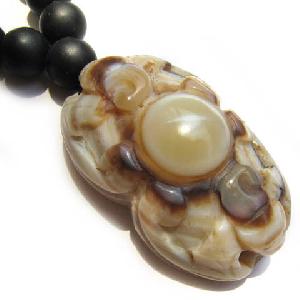
We practiced with #18. I pulled up Google and asked for search terms. At first, they were giving me language straight from the poem, and I was trying to explain why that wouldn’t work. And then, I was inspired. When a kid suggested we search for “eye of heaven,” I said, OK, let’s do that.

Up came this image, which on the not-very-clear projector, looked quite gross, like a slimy bug or something.

“Here’s the point,” I said. “Computers are stupid. They’re literal. You tell them ‘eye of heaven,’ and they look up ‘eye of heaven.’ Humans have brains. You tell them ‘eye of heaven,’ and they think, ‘Oh, the sun!’ See the difference between literal and figurative?”

Light bulbs all over the room.

Can’t wait for next week’s lesson, in which they have to find three images to put into a Keynote presentation. Week after next, actually, we’re on break next week.

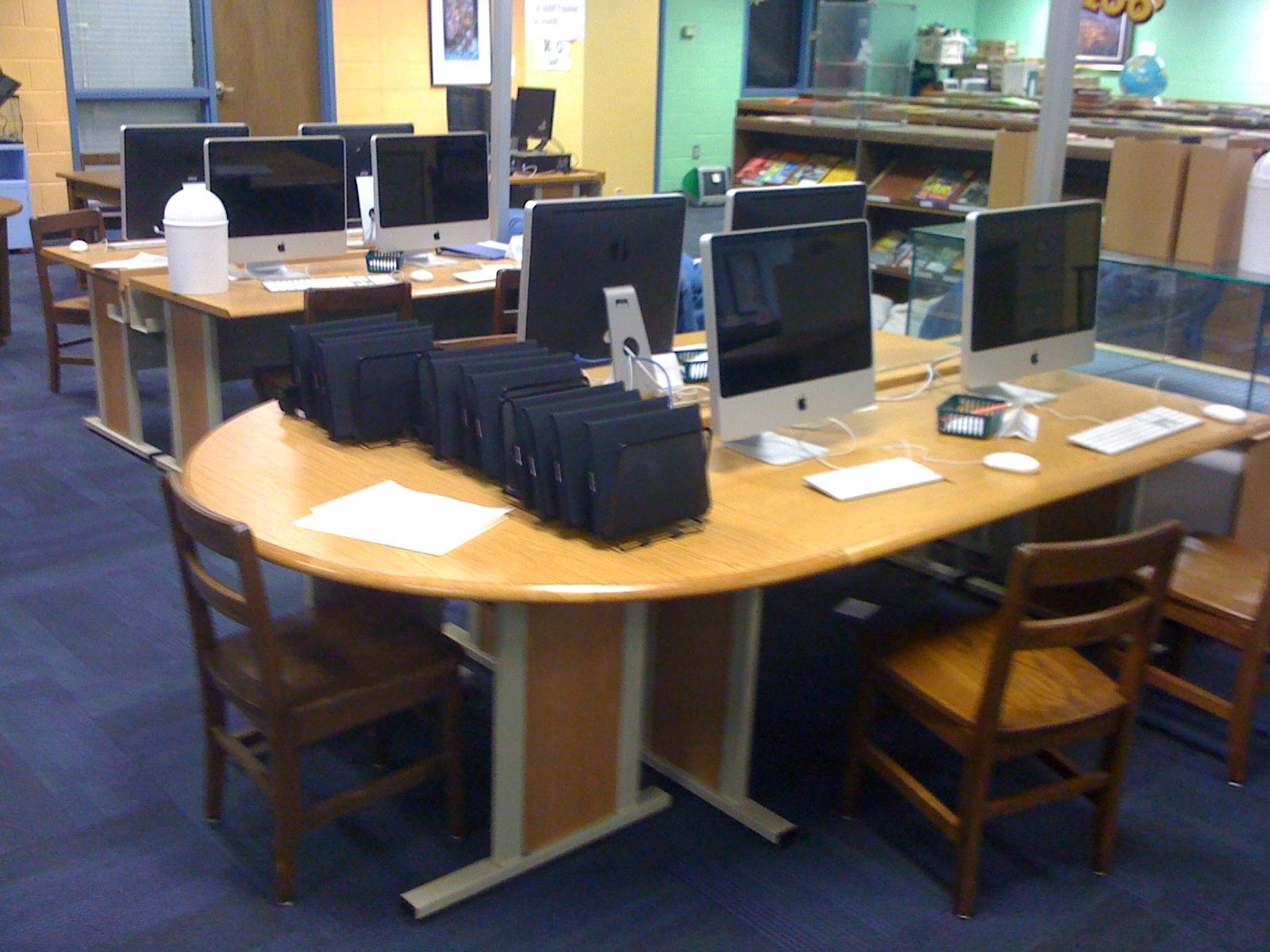
By the way, this is what a 21st century media center looks like:

Cello sonata, second mvt., take 1

This is pretty sad: six measures of music, and it sounds nothing like I want the final piece to sound like.

For one thing, the computer cannot duplicate all the myriad voices the cello is capable of. This movement is marked as “dry, coarse,” and I want a kind of raspy, gross quality to the bowing. So you will have to imagine that.

You will also have to imagine that the piece is played almost without a time signature, belabored, halting, grinding. I can’t replicate that either.

With that in mind, here is the current end of the second movement.

I wrote the ending because it has to lead into the stream of the third movement.

In which I declare my support for a certain part-time Alaskan governor

I posted this on Facebook, but I think I need to record it for posterity here. Plus you never know how many out of my thousands of readers are not on Facebook.

It appears that John McCain‘s running mate has applied to register her name as a trademark. I am not making this up, because I don’t have to.

I wish to declare for all the world to see that I support her in this, and in fact, I am going to don my Trademark Police uniform and make sure that any time I see her name in print, I will correct anyone who does not print it correctly, i.e., Sarah Palin®.

Of course, as soon as the news broke, the application was refused, but I blame this on the lamestream media and the leftist establishment. I see no reason not to give Sarah Palin® what she wants on this one.

This way, no one in America will be unclear in the least about Sarah Palin® and her goals, not to mention her intent to rake in all the cash that’s out there in this great land of ours. And I think we should be clear about that.

So, Sarah Palin®, here’s to you! May you forever remain as secure a brand as Aunt Jemima®, Betty Crocker®, and Mr. Peanut®!

update: Sarah Palin®, speaking to the Christian Broadcasting Network, criticized the media, saying, “I want to help clean up the state that is so sorry today of journalism.” I don’t think I could have said it better for her.

Cello sonata. Again.

I’ve been not composing. At first it was the backwash of the first movement, that ‘turning of the tide’ I’ve written about before. Then it was the hectic time we call ‘GHP interviews.’ Now it’s ‘being sick doesn’t help and I can’t remember the great music I dreamed under the influence of medication.’

Still, I’ve marked it on my calendar to get back to work tomorrow night on the second movement, and today I decided that the eftest thing to do is to write the last eight measures, since I have a pretty clear idea of what I want to say there. Then I can work my way backward to the beginning.

Also, since I have about four minutes in the first movement, and the last movement is likely to be that long, I can plan for the middle movement to be about three. Since it’s going to be an adagio, something slow, that eight measures could be a pretty good chunk to be going on with.

Yep, that’s my plan, all right.

A small but profound rant, and other thoughts

It has not escaped my notice that when conservatives put forth plans to fix our public schools, they do not involve actually fixing the public schools. More and more standardized testing, charter schools, or vouchers: which of these involves actually taking a failing school—and let’s just point to an honest-to-goodness failing school in some inner city somewhere—and solving the problems it faces in providing a free and appropriate education to the young minds trapped there?

I have a problem with that.

In other news, my media center has been undergoing a complete technological facelift.

I’ve always stayed ahead of the curve on the technology thing, all the way back to the Apple ][e’s that Alan Wood bought me for the media center in the old East Coweta High. I made the technology readily available to the students and trained them how to use it, even to program in AppleBasic. I myself, as I’m sure I’ve said around here somewhere, programmed a word processor, a card catalog printing program, and an overdue fines/notice program that everyone in the county used until the state automated us in the late 1980s.

For the last ten years, the school system has declined to purchase Apple Macintosh computers, for reasons which we will not go into here. As the years slipped by, all the elementary schools (including mine) began to divest themselves of their iMacs, the old candy-colored winners from the 90s. And they all came to me, because I refused to give them up.

For one thing, they still ran, and they were still more reliable than all the crappy Dells flooding the county. For another, I was still able to use HyperCard (‡‡‡) to create some really useful educational tools. And finally, while other media centers might have six look-up stations, I had twenty-six. Woof!

However, a decade is a decade, and the poor things began to wheeze and complain about the bulky internet pages they were having to deal with. So I began to campaign for new computers. Two years ago, after holding my breath and turning blue, I was finally awarded six new iMacs, the first instructional Macs in a regular school setting in forever.

So I began to campaign for more. I was able to demonstrate to the powers that be how well they integrated into the network, give or take a few hurdles set up by the IT Crowd themselves due to the nature of the insecure network of PCs they have to manage.

To make an uninteresting story short, I got the money for two new iMacs from our PTO, plus a new printer, which was necessitated by the death of my old Apple LaserPrinter 16/600, after eleven years of solid service. The iMacs came last week, and the printer came yesterday.

But wait, there’s more: we were suddenly able to use some Title I money to purchase twelve iPads. I will soon have two instructional computers for each of my six tables. This should be interesting, given the real power of the things—and their real limitations. It would have been nice, for example, to have known about the money for the iPads before I ordered a new printer, because they will immediately print to an AirPrint-compatible printer, of which there are currently maybe eight, all made by Hewlett-Packard.

Oh well. I don’t think that’s something I get to complain about, having twenty Apple computers at my disposal.

However, there is something very sad about unplugging those trusty little iMacs for the last time and lugging them over to the wall, to be disposed of. And I had to say a few words over the LaserPrinter. I felt like a criminal pulling the plug on it.

Now that I’m slowly returning to the Land of the Drinking (my stomach issues have largely prevented the consumption of any alcohol) I’ve been playing around with some cocktails. At the moment, I’m experimenting with apple juice, my recent liquid of choice.

I’m not sure about this one. I’m halfway through my first attempt, and it may be a bit cloying. I’ll adjust tomorrow and try again if necessary.

YELLOW FAIRY

1/2 oz. Galliano

3 oz. apple juice

2 drops absinthe

Shake the Galliano and apple juice with ice; strain into martini glass. Add the drops of absinthe.

This weekend interviews/auditions for the 2011 Governor’s Honors Program begin. I’m once again in charge of the theatre interviews at Pebblebrook High School. I was asked also this year to corral and confirm the interviewers, and if no one backs out between now and Saturday morning, I will have the full complement of 35, which is a first for several years.

I have applied to teach either Theatre or CommArts this summer, and I’m adamant that I don’t care which. It’s been kind of fun to have both Jobie and Mike desire me. Of course, there’s no guarantee I will be offered a position since I took last summer off, but honey, please. Does that make me nervous? Yes.

I should write a post about the coursework I’ve planned for each department. Maybe later.

Excelsior.

I opened two new files last night, one labeled “ii. adagio,” and the other, of course, “ii. adagio ideas.” I threw some notes at the screen, but nothing definitive emerged.

This is the second movement of the cello sonata. I’ve already started the third, of course, but I’m pretty sure I need to look at bridging the headlong rush at the end of the Moderato to the gentle, flowing relief of the Andante.

I know what I want: the piano providing some kind of transparent, crystalline structure through which the cello wanders like a ghost, ending in the sludge at the lowest register, grinding to a halt. I keep thinking that the cello’s harmonics are the sound I need, but Finale doesn’t play them back so I’d be flying blind as it were.

Still, I’ve begun.