A rant

If you do not follow the antics of our right wing, as I tend to do—like watching the carcass of a wild animal day by day on the side of the road—you may be unaware of the Michigan legislature’s “Matt’s Safe School Law,” which was named after a young gay man who committed suicide after being bullied.

What’s so rotten about that, you might ask?  Michigan State Senate Republicans amended the bill to include an exception for “deeply held religious beliefs.”

Think about that for a moment.

That’s right: if the bill passes with that amendment, it will be illegal to bully a kid in school—unless Jesus told you to.

Here’s what Sen. Gretchen Whitmer had to say to her colleagues:

“Your exceptions have swallowed the rule.”  Don’t you like that?

Of course, the strict wording of the amendment just means that it’s OK for someone to say, “I believe being homosexual is against God’s will.”  Only that’s not what those people say, is it?  Simple “declarations of faith” are not exactly what is being licensed here, is it?

Here’s the thing: the Republican neanderthals who came up with this clearly meant for it to protect those little Christianists amongst themselves who think it’s an infringement on their freedom to worship as they please if they can’t kick the crap out of a gay kid.  Sen. Whitmer’s emotional castigation would not even register with those people, because of course it’s OK to leave that queer a bloody pulp on the playground.  Leviticus tells us so.

As usual, of course, they haven’t thought this through.  When the Muslim kid punches out the little Christianist for drawing a sassy cartoon of Mohammad, would they be OK with that? We know what these Republicans would say about Muslims who riot over depictions of the Prophet in newspapers, but their amendment protects exactly this kind of behavior.

“But that’s different!” they would cry if confronted with the idea.

No.  No, it’s not.

Retreat, Day 2

12:30 pm: I slept later than I would have wished, but have been productive nonetheless.

I’m slogging away at transferring the vocals, piano, and strings to the Ayr template.  Sometimes this is a piece of cake, others not so much.  It will amuse those who know the piece that “10. Blake Leads a Walk on the Milky Way” took forever.  Not only are there thousands of time signature changes, but there are embedded, invisible key changes from  C major to A minor.  If you paste in material that switches from C maj. to A min., the new piece will transpose the differences.  Not a problem: you can insert the invisible key change and tell it to transpose, and all is back to normal.  But still.

When I got to “Marmalade Man Makes a Dance To Mend Us,” I went ahead and orchestrated the whole thing, since the whole thing was flute/recorder/clarinet/bassoon, and pizzicato cello and bass.  This is the exception  however: in the “big three,” the amount of divisi I had in the strings is disheartening.  I’ll have to find a way to cover/redistribute that sound.

All of that’s in the future—O lucky me!—and I should be done by Vespers.

Oh yes, we’re having Vespers.

At the moment, however, I’m in the middle of a hot tub break.  I popped out to make a note in Ego & the Dynamic Ground on some thoughts I had in meditation.

2:45 pm: I’m done with William Blake’s Inn, at least the easy part.  I’m now going to set that aside and play in the couple hours I have remaining to me.

I could start reconstructing A Christmas Carol, but that would be boring.  There’s also Simon’s Dad, but that’s too major.  So I think I’m going to play around with some more piano pieces, tentatively called Five Easier Pieces, because I at least plan for them to be easier than the Six Fugues.

Retreat 2011

It is probably unfortunate that the cabin we’re staying in for this year’s Lichtenbergian Retreat has wifi.

Still, it allows me to live blog, kind of, my work—and that’s a time-honored Lichtenbergian principle.  Nay, it is the very foundation of Lichtenbergianism, doing something semi-valid in order to avoid the actual work.

9:33 am: I’ve been working for about an hour, poking into the nooks and crannies of Finale 2012. It seems that I buy a new version of Finale every time I have a major thing to work on, which always slows me down while I figure out where Finale hid everything this time.  If I were a working composer, I’d go nuts having to relearn all the menus and stuff.  For example, up until now you changed the name of a staff in the staff dialog box.  But now that’s in the new Score Management window.  Feh.

At any rate, I’ve been trying to figure out the best way to set up a template for the reorchestration of William Blake’s Inn, which is my major task this weekend.  I think I’ve got it: children, SATB, piano, synth I, synth II, and string quintet.  The synths are actually made up of independent staves, since one of the new tricks Finale can do (just in time for this orchestration) is to change instruments midstream, but if you have a “piano” staff, your only choices are other double-staffed instruments like the harp.  If you have two independent staves grouped as “Synth I,” then your choices open up to all the other instruments.

So yes, the world premiere of William Blake’s Inn, if it happens now, will be with a reduced orchestra.

Why, you ask?  Not to get anybody’s hopes up, but William Blake’s Inn is being considered as the performance we will send to our sister city, Ayr, Scotland.  Next June.

So there’s that.  Yeah.

Two things have become painfully apparent to me: I should have brought a score to look at, and I should have brought my Cinema Display.  The size of the laptop screen is not conducive to zipping through a full orchestral score looking for the part you’re hoping to duplicate.  Oh well.

A score would have been helpful in quickly finding where time/key signature changes happen: I can copy and paste the parts from the original to the new template, but all those changes do not come with them.  With a piece like “Milky Way,” that’s a pain.  Not that I’m going to work on “Milky Way” this weekend.  Stick to the simple ones: “Wise Cow,” “Dance,” “Fire,” that kind of thing.

And actually, just stick to porting over the voices and the strings.  Even the piano parts can wait for the most part.  If I just get the voices/strings laid out in a couple of pieces, then I can start arranging the children’s chorus part, because to be brutally honest, this was never conceived as a piece for children to perform.

More later.

3:38 pm:  It’s almost hot tub time.  Since this morning, I’ve gotten seven of the fifteen pieces transferred into the new template, which seems kind of slow, but some of these are horrors of multiple time signatures.  I have to set up the new blank piece with all the time signatures and key changes ahead of copying and pasting the originals in, or it all goes whacky and it’s easier to start over from scratch.

I have been copying and pasting the piano part as well as the vocals and the strings.  I’ve standardized the solo lines, giving them a separate staff above the chorus, whereas before I think I was saving paper by having solos embedded in the chorus staves.

Above all, I’ve been resisting doing any other work, although with “Rabbit Reveals My Room” and “King of Cats Orders an Early Breakfast,” I did stick in some of Synth I’s stuff, because without it there wouldn’t be much accompaniment to go on.

Big question right now: time to do one more, or hit the hot tub?

Hermain Cain, Marxist

It’s been a while since I’ve gone on a liberal rant, mainly because the conservatives these days are so head-slappingly idiotic that it hardly seems worthwhile to complain about them.

But even though the Republican Presidential candidate debates are particularly popcorn-worthy, an idea occurred to me this morning on the way to work that I have to share.  It concerns Herman Cain, one of the quasi-front-runners in the Republican race.

First of all: honey, please.  Does anything think this person is going to be the Republican candidate, much less the next black President of the U.S.?  Not after I get through with what I have to say.

In one of the debates—it was #143, I think, the one in Talladega—Herman Cain shared his solution to the illegal immigrant issue.  I’ll link to it so you can read for yourself, but essentially, operating on the premise that one can never be too grotesquely bloodthirsty to gross out the Republican base, he proposes an electrified fence, and if that doesn’t stop the Mescans, shoot them.

No, really.

Now you might think this would shoot Cain to the top of the polls, and if you go read the comments on the FreeRepublic, you’d be right.  But I’m here to tell you that Herman Cain is nothing but a big-government, big-spending Marxist.  How do you think that big old fence is going to get built?  Volunteer labor?  Heck no, that’s going to be one more gigantic gummint boondoggle, costing billions of tax dollars to begin with and like as not going billions over budget.  You can’t tell me that’s not Cain’s plan from the get-go.

[And no, the billions of tax dollars being spent on the fence would not be creating jobs.  Don’t be stupid.  The government can never create jobs.  It just spends money, building fences.  And highways.  And dams.  And bridges.  But jobs?  Honey, please.]

What would a real teabaggin’ Reagan Republican do?  Privatize, that’s what!

Why devote gummint soldiers to the task of shooting down illegals when you can sell off the hunting rights to the private citizens of Arizona and Texas to do it theirselves?  It’s a win-win situation, y’all: we the freedom-loving taxpayers get the income from the rentals; the border states get an economic boost in the areas of deer stands, ammo, and liquor; and the whole nation benefits from being rid of those devious Mescans who love nothing better than to swarm into our country and take those $5.00/hour jobs picking tomatoes in Alabama.

So the next time you hear someone speak admirably of Herman Cain, feel free to point out to them that the man is no better than Barack HUSSEIN Obama.  Worse: because Obama hasn’t proposed devoting nearly the amount of government money to creating jobs for Americans that Herman Cain has.

I await a grateful nation’s thanks.

All those years

I’ve been meaning to post on how much I am enjoying my job these days. “Director of the Governor’s Honors Program”–I never get tired of saying it, and those of you who have had to endure my saying it know that I can’t manage it without grinning.

I’m still petrified that I’m going to screw up in a major way, but so far my blunders have been minor and the kind that only someone a lot more anal than I would have caught. Nothing irremediable yet, so I think we’re OK.

One of the projects I’ve been working on is adding all the GHP participants ever to a master database. For the past 15 years or so, it’s easy: you just import the students from that summer’s database into the master database. (Remind me to tell you how Galen Honea and John Tibbetts II saved western civilization.  It’s true!)  But there are 35 years of students who don’t fall into that category.

My predecessors, who started the project, got a lot done, but this week I discovered I was missing about 20 years. Not a problem. Earlier, I had organized all the archival files, so it’s a piece of cake to go pull a folder and start typing in the list. It’s not that big a deal, since all we’re including is the year, the campus, the major, first name, last name, and school. The database looks up the system, and I can make it auto-enter the year, campus, and major. I also have devised it so that it will auto-fill the name and school based on what’s already in there, so I can rip through an entire year (about 600 students) in an afternoon.

From the very first year I worked on, 1976, names started jumping out at me: kids who grew up to teach at GHP (and are still teaching); kids from Newnan, etc. I’ve started seeing kids I taught. It’s neat in a maudlin, nostalgic kind of way.

Today, the full impact of my project hit me: I’m typing in 1976 through 1995. That is, essentially, from the year I started teaching to the year before I returned to GHP full time in 1996. I’m going to be seeing a lot of names in the next couple of weeks, a lot of people who have come and gone, a lot of memories of relationships that of course no longer exist for the most part.

This is a major part of growing old, of course, the bittersweet reflections on les neiges d’antan and all those beautiful times and faces that fade. Part of wisdom, I think, is the ability to look back with nostalgia but not regret. It would be very foolish to be bitter about losing the past, would it not? There are those who do, I know, but madness that way lies. You can’t reclaim it—although of course there’s always Facebook for reconnecting, which I have certainly availed myself of—so I’m thinking that kind of reaction must be pathological fear of having nothing left in you. Am I making sense?

To be sure, I had better have plenty left in me if I’m going to play at being the Director of the Governor’s Honors Program. Every day and every way taxes my ability to learn new procedures, especially the arcana of state finances. But—it’s fun. Pure, exhilarating fun. Along with the bittersweet carpal tunnel syndrome that comes from typing in 1800 kids whose lives were changed one summer.

New drink

The Pomander

  • 1-1/2 oz. cinnamon whiskey (in this case, Fireball–thanks Marc!)
  • 1 oz. Cointreau
  • 1 thick wedge of lime
  • cloves

Squeeze the lime wedge into a martini glass and dust with cloves.   Shake the liquors with ice, strain.

It has occurred to us, the lovely first wife and myself, that for the holidays one could stud the lime wedge with an actual clove, á la an actual pomander.

It has a lovely taste, vivid, not overly sweet.  The lime juice keeps it complex.

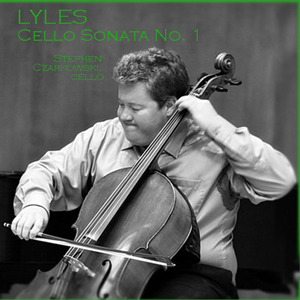
Cello Sonata No. 1, III. Andante (Elegy)

Okay, I think I’m done.  Notice that I did not say I think the piece is finished.

I am particularly concerned that mm. 51-56 are suspect.  I am willing to throw them out and write something more stringent.  I await your comments.

Cello Sonata No. 1 (2011)

I. Moderato | score [pdf] | mp3

II. Adagio | score [pdf] | mp3

III. Andante (Elegy) | score [pdf] | mp3

Cello sonata, mvt 3, take 8

I’m quite pleased with some of the way it’s going at the end of today’s work, but as always I’m flummoxed by my lack of theoretical knowledge.  You wouldn’t believe how long it took me to find the harmony for one measure, and I’m still not sure of it.

Where it tapers off is where I stopped for today and headed outside to bask in the labyrinth. Again, there’s a gap, then what I intend to be the ending.  I’m sure you’re wondering how I’m going to connect it to what’s there now.  I am, also.

III. Andante (Elegy): mp3

The problem with Santorum

Rick Santorum, whose Google problem has been well documented — don’t bother clicking on those links , since they all go to the same place ; I merely link to exacerbate Rick Santorum’s well-documented Google problem—really blew it in the GOP debate last night.

The moderator sandbagged him with a YouTube question from a gay soldier serving in Iraq, and Santorum did his Santorum thing, saying that the repeal of DADT was “social engineering” and that if he were elected President he would reinstate DADT.

The audience, of course, booed… the gay soldier. Of course. Nothing to say about that except that the Republican base seems intent on completing their devolution into knuckle-dragging yahoos.

Let’s talk about “social engineering.” That’s Republican code for “lifting of statutory discrimination against People Who Are Not Like You And Me,” and here I am speaking as an upper middle class white male, which to the Republican brain is the only possible You and Me that could be considered.

So what would you call it if you enacted a law to suppress a naturally occurring segment of the population in an organization, to hide them utterly, and if they dared show themselves, expel them from the organization? In other words, you crafted a law to make sure that this naturally occurring segment of the population vanished. What would you call that? That would seem to me to be the quintessence of “social engineering.” But that certainly will never occur to the Republicans. (Actually, I’m sure it has. They’re just manipulating the yahoos.)

The rest of the GOP field last night maintained a discreet silence. After the debate, when asked about the booing, the only comment from anyone, including Santorum’s people, was that the booing was “unfortunate.”

I’ll say it was unfortunate, only not in the way that the GOP minions want you to think they meant it. They didn’t mean that it was a shame and a disgrace to the Republican party that audience members for their Presidential candidate debate booed one of our troops. They meant that it was unfortunate that the rest of the nation saw what knuckle-dragging yahoos their candidates are trying to appeal to.

“Unfortunate.” Really? That’s the best you can do, boys? What about “My candidate condemns in the strongest terms the lack of respect these audience members showed one of our fighting forces. There is no place for this kind of homophobia in my Republican party.”? Did we hear anything approaching the sort? Will we ever?

Ladies and gentlemen, I give you the modern Republican party. Vote for them at your peril.

New York

Last weekend I took my lovely first wife to New York City for her birthday. We saw two exhibits and three shows, plus did a little shopping. It was a spectacular time.

We had never been to the Fashion Institute of Technology, down on 27th St, but the museum is free, and so we went. There was a nicely done exhibit of sportswear from the late 19th century to the present with some lovely examples. I especially liked the baseball shirt from the 1920s.

There was an exhibit of illustration masters students’ thesis work, and a lot of it was that surreal, drug-inspired stuff that litters the internet and magazine ads. (Although, have you seen the new Heineken commercial? Who spent that much money to do something that crafted for such a low-rent product?) The good stuff was all children’s illustrations: whimsical and beautifully rendered.

The highlight was an exhibit of items from Daphne Guinness’ “collection,” aka “her closet.” Daphne Guinness, for those who don’t know—of whom I count myself one—is a heiress of the ale concern. She’s excessively thin, tall, and glamorous, and she has made it her life’s work to be seen at events, dressed in over-the-top, one-of-a-kind outfits.

Having seen the Alexander McQueen exhibit at the Met back in June, we were not unprepared for the utter bizarreness of this woman’s clothing. There was nothing in the exhibit that was not beautiful, but all of it was grotesque. Quite a fun time.

Our first show was Anything Goes at the Sondheim Theater. Frankly, it was a disappointment. The actors were good, solid voices, etc., etc., but the direction was lame. Kathleen Marshall is a first-rate director of this kind of thing, but here she was simply off her feed. The couples choreography, i.e., the Fred and Ginger stuff, was no better than you would see at any senior play hereabouts. The lighting was the best thing about it.

Our second show was Sondheim’s Follies at the Marquis Theater, and here we were in the hands of a master. What a perfect piece of art! And how perfectly staged! The cast was a revelation on all counts, and the choreography was thrilling. It made up for the lackluster matinee in every way.

I was only vaguely familiar with the show, having listened to the original cast album at some point, but never having read it or seen it. It had not resonated with me, musically, as have some of Sondheim’s other shows, A Little Night Music and Into the Woods in particular. But in performance, the show packs a wallop. Nostalgia, in its original sense of pain, was the overwhelming mood. The ruined theatre, beyond saving, houses the (literal) ghosts of showgirls past, and of the lives of the four main characters.

By the end of the show, we have seen and understood who Sally and Buddy, Phyllis and Ben have been and are, but at the end of the night we are no closer to seeing what happens tomorrow than they are. Other choices, other lives. Good stuff.

On Sunday, we hit the Hell’s Kitchen flea market, where I bought a Tibetan singing bowl and a couple of other doodads. We hit MOMA for a couple of exhibits there. There was a major DeKooning retrospective: I don’t think I knew that he was a major abstract expressionist. The portaits were all I’d ever seen, and I despise them. His other stuff though I quite liked.

There was a small installation of Cy Twombly’s assemblages, just junk he found lying around, nailed together, and slapped some white paint on. They were fun and interesting in a put-this-in-the-labyrinth kind of way. It made me want to spend a week in the back yard playing with the concept.

Finally, it was time to see The Book of Mormon.

Oh my. I am not at all a fan of South Park, but this show is a work of genius. Imagine the most profane, obscene, sophomoric take on religion and faith and First World/Third World issues and personal growth and cultural blindspots. Now imagine it transmitted via the dippiest Glee episode ever. Now imagine it winning the Pulitzer Prize. That’s The Book of Mormon.

Looking at it simply as a Broadway show, it wins on all counts: performances? Genius. Songs? Savagely gleeful, genius. Sets? Genius. Costumes? Genius. Choreography? Genius. Book? Double genius.

Nearly a week later, I’m still mulling over moments from the show and the important underlying themes and ideas. That’s the kind of theatre we need on Broadway, not the idiotic pablum of Spiderman or Mary Poppins.

Those who have assailed the show for irreligiosity are flat out wrong. And stupid. Does the show make fun of Mormons? Yes, indeed, because there’s no way to put any religion onstage and examine its most closely held myths without one’s tongue firmly in one’s cheek, and Mormon mythology is sillier than most.

However, those who get blocked by the irreverence of the portrayal of Jesus appearing to the warring tribes of Jews in preColumbian America—not to mention those who get blocked by the unbelievable obscenity of the village pageant—have missed the other point the team is making about faith and religion, and that is the silliness of the myths should not distract us from the point of the matter: our job while here is to make a better latter day—for everyone.

It is worth noting that the one scene that depicts an actual religious activity—that of the boys baptizing the villagers—is done simply and beautifully, without a trace of irony.

So, good trip all round. We’re going back next year, but delaying the trip by a week so we can hit the BAM Next Wave Festival. Anyone want to go to Brooklyn?