Nothing (Day 294/365)

Today was my niece Hayley’s high school graduation, so the entire evening was spent crammed into the bleachers at the stadium. I tried to jot down some of the unusual ladies Thurgood might sing about, but it’s hard to write down things like “three breasts” when people are curious as to what one might be writing down in one’s little black book.

71 days to go.

Moonlight (Day 293/365)

Minimal creativity today, but it may be significant.

You may recall that one of the songs in Act II of Day in the Moonlight is a novelty song for Thurgood (the Groucho character), along the lines of “Lydia the Tattooed Lady.” Another novelty song from the same era, “Egyptian Ella,” has much the same flavor (see here for lyrics and here for a sound file) and it is one of my favorite songs.

I had suggested to Mike that he come up with some kind of bizarre female for Thurgood to sing about. However, it has not escaped my notice that singing amusing songs about fat girls might be a little, what, insensitive?

What to do, what to do?

And then this morning, the answer came to me, unbidden but clear: Thurgood can sing about any number of ladies with unusual features, as long as he sings about how he would never, ever sing about ladies with unusual features.

Piece of cake.

Copyright (Day 292/365)

The other day I got an invitation to submit something to the “Outside the Bachs” competition, administered by composer Mark Burrows for the Choral Union of the First United Methodist Church in Forth Worth. This is not as big a deal as it sounds. As a member of the American Composers Forum, I often get notices of competitions like this. Last year, I submitted something (I’ve already forgotten what), so now I’m on their mailing list.

Still, if I can, I’ll come up with something. It has to be SATB, piano or organ accompaniment, sacred text, not necessarily Christian. My problem is that I have to find a text.

In the middle of the night last night, as I lay awake for one reason or another, I thought about this:

A Elbereth Gilthoniel,
silivren penna míriel
o menel aglar elenath!
Na-chaered palan-díriel
o galadhremmin ennorath,
Fanuilos, le linnathon
nef aear, sí nef aearon!


O Elbereth, Star-kindler!
You of course recognize it as the hymn sung to Varda, Queen of the Valar, by the Elves of Middle-Earth. Certainly a sacred text, if not quite what Mark Burrows had in mind. It would be a lovely challenge to set to music.

I will pause for a moment to see if you can think of why this text might be problematic.

Yes, of course, you see, it took me a few minutes of thought to remember that this is not in fact an ancient text, but a copyrighted work of fiction, not even 100 years old, written by John Ronald Reuel Tolkien. I cannot set it to music without getting permission from the copyright holder, or in this case, his literary executor, Christopher Tolkien.

Which brings me to my actual topic today: copyright and the commons. Recently, in the august pages of the New York Times, novelist and right-wing arse Mark Helprin wrote a guest column in which he wondered exactly why intellectual property is treated so very differently from real property. His main point, as far as I could tell — the man does not write well — was that if you build a business or a building, the government does not step in after you’re dead and dismantle it, depriving your heirs of the income of your property. So why, oh why, will his heirs not receive the royalties from his books in perpetuity?

He presents no evidence as to why this is a good idea for society, nor does he present any counterclaims to his whining. This is remarkable, because he actually filled half the editorial page with this column, and yet the actual content of his argument is no more than what I have just summarized.

I don’t think he was lazy. I think he was dishonest. Any real argument as to the validity or even desirability of his proposal would have to include a discussion of the concept of the “commons,” and almost anyone who bothered to read the column would see straight through his specious logic.

Here’s the deal: many years ago, there was no copyright. People created, and other people borrowed what they created. Bach’s Concerto for Four Harpsichords? A straight transcription of Vivaldi’s Concerto for Four Violins. Shakespeare? Don’t get me started on his outright theft of other people’s stuff.

The upside of this was that everyone created constantly. They had to if they wanted to keep making a living. Shakespeare didn’t publish his plays during his lifetime because if he did, his company would lose their exclusive production rights. And that was the downside. You couldn’t be assured of the income of your works because anyone else could print them and sell them without paying you a farthing.

So eventually, a couple hundred years ago, the concept of copyright emerged. Like the concept of the corporation, it was conceived as a temporary stay against the claims of the commons, i.e., what one of us creates belongs to all of us, but for a little while, we’ll allow you exclusive right to any income produced by your work. After that limited time, it goes into the pot with everything else to enrich all our lives. Keep creating!

At first, copyright was very limited, like fourteen years, much like today’s patents for new medicines (which is seven years, after which we get to pay lower prices for generic versions). As time went on, laws extended copyright for longer and longer until now it’s the life of the author plus 70 years, and for a corporation, 95 years. This means that I won’t be able to use A Elbereth Gilthoniel until 2043, when it will enter the public domain 70 years after Tolkien’s death.

It also means that Walt Disney Co. gets to keep Steamboat Willie out of the public domain. The 1998 law that extended copyright is known as the “Mickey Mouse Protection Act” in some cynical quarters, and that’s what this is all about: protecting income for corporations. Disney is ferocious in guarding its copyrights and trademarks, and the idea that the first Mickey Mouse cartoon was about to be free drove them all insane.

All Mark Helprin is doing, in his conservative little way, is hopping on Disney’s juggernaut. Screw the common good; just give him his share. Forever. This, from the author of:
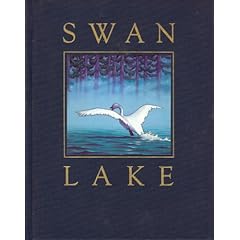
and

Was there any trace of irony in Helprin’s column? Nope, just very very sincere self-interest.

Discuss.

A column (Day 291/365)

Spent all day rearranging the media center, moving my desk out into the main room, generally preparing for the arrival of my Promethean board in a couple of days.

Near the end of the day, I checked my Moleskine notebook and realized with horror that I had not actually written my column for the Big Ideas website over the weekend. I put many stars by it and swore to make it top of the list tonight.

So after a brief Masterworks rehearsal, I came home, put on my “contemplation” playlist in iTunes, fired up WriteRoom, and set my mind to snark mode. In an hour and a half, I had knocked out a not-too-rambling piece entitled “Are you smarter than a fifth grader?,” taking potshots at standardized testing, the privileging of logico-verbal intelligences, adult smugness about knowing “stuff,” and E. D. Hirsch.

My favorite lines? “Of course I’m smarter than a fifth grader. I outwit them every day.” And (in the riff about multiple intelligences) “I think I could beat them in kickball, but only if I didn’t actually have to run the bases.”

74 days to go.

Day in the Moonlight (Day 290/365)

This morning I finally re-read Mike Funt’s A Day in the Moonlight and took my first steps towards turning it into a play with music. That’s not the same as a musical, and we’ll discuss that in a moment.

Mike wrote this play in his junior year of college, and it was produced his senior year as part of Valdosta State’s regular season. It’s a resetting of Rostand’s The Romancers as a Marx Brothers vehicle, and quite clever and silly it is, too. Groucho is one of the parents on one side of the wall, and Margaret Dumont is on the other side. Their children are in love with each other, and as in the original the parents have built the wall and pretended to feud in order to provoke just that. The added twist is that Groucho and Margaret are themselves a couple, hiding that fact from their children.

Harpo and Chico are the two actors that Groucho hires to adbuct the girl so that the boy can be a hero and the wall can come down, as it does right on schedule at the end of Act I. Etc., etc.

So a couple or three or four years ago Mike asked me to write some songs to insert into the action, since he had a couple of theatres waiting for the show if it were a musical. Needless to say, I haven’t gotten around to it. But now, with William Blake on hiatus for an indefinite period, I’ll be tackling this project.

It will not a be a musical. It will be a play with music, i.e., the songs are just sort of inserted into the action rather than swelling from the action itself and moving the plot along. This is partly because the original Marx Brothers movies were themselves structured like this, and partly because the action is so slight that we would have to rewrite a lot of the script in order to make it a true musical.

So step one was to re-read the entire script this morning and decide where might be good places to stop the play cold in its tracks and stick in a song.

Preliminary research indicates twelve such songs:

“Sheer Poetry,” wherein Garrison, our hero, sings one of “his” poems to Elizabeth, our heroine. It is in fact made up of snippets of famous verse: “Shall I compare thee to a summer’s day?/Let me count the ways.” That kind of thing. Bouncy 1930s leading man flirting song.

“Rationale for a Wall,” sung sequentially by both Thurgood/Groucho and Alexandra/Dumont, explaining to their respective children why they hate each other. Needless to say, the reasons are completely bogus and completely different.

“The Love Song of Thurgood [whatever whatever],” the slightly creepy/loony wooing song from Thurgood to Dumont.

“We’ll Run Away,” in which the children sing of their plan to elope and how beautiful their married life will be away from home.

“Catalog,” in which Fedallini/Chico catalogs all the ways that Pinke/Harpo can actually play a death scene. This is in response to Thurgood’s query. Think the Player’s catalog from Rosencrantz & Guildenstern Are Dead set to music. Fake saltarello.

“What Could Go Wrong?,” maybe, in which Thurgood and Fedallini plan the abduction. If we can work it right, maybe the plan in each verse can end in disaster and they have to start all over.

“Tear Down That Wall!,” Act I finale.

I think the obvious opener for Act II is a song about the party, but the script specifically refers to how no one is there and how dead it is. Maybe that’s our song.

“Novelty Song I” and “Novelty Song II,” the inevitable Chico-plays-piano song. The first one is the Kitty Carlisle song, i.e., Elizabeth sings a cute song about nothing. The second one is our “Lydia, the Tattooed Lady” for Thurgood.

“Florida!,” in which Fedallini convinces Garrison, who’s leaving for adventure, to go with him to Florida for excitement. That’s the idea; what they’re actually singing about, I have no clue.

“Where Did We Go Wrong?,” for Thurgood and Alexandra. Maybe a reprise of “What Could Go Wrong?”

“P-I-N-K-E,” in which Elizabeth sings about how much fun Pinke is, who’s stayed behind as part of Fedallini’s plan to keep her from marrying in Garrison’s absence.

“Back With You,” or something like that: the lovers’ reunion song. We can throw in Thurgood & Alexandra and Fedallini & Pinke for good measure.

“Act III,” the finale, in which the cast sings of what the audience will be missing in the mythical Act III. I’m thinking falling chandeliers and helicopters, myself.

75 days to go.

Yard work (Day 289/365)

In a quotidian reflection of Wallace Stevens’ metaphor of the garden, I spent the late afternoon reclaiming the edges of my lawn. That is, I tore away the growth of grass over pavement and literally re-edged the whole place.

If I had had more time, I would have uncovered the brick walkway. Every five years or so, I’ll get the energy to hack away at the zoysia where it has spread over the bricks and release the walkway from its imprisonment. I think we had been living in the house for five years before I even discovered it.

However, it’s a lot easier to deal with if the soil around it is moist, which at this point in the drought, it’s definitely not. I shall be on the lookout for a good downpour.

76 days to go.

Not nothing, really (Day 288/365)

I have in fact created two margaritas, two superlative margaritas, and I have consumed them, sitting on my front porch in the glorious weather, reading the New York Times and doing the crossword puzzle. In a moment, I will fetch Children of Húrin and read it. And maybe I’ll create another margarita.

If that is not a well-made life, I’d like to know what is.

77 days to go.

Nothing (Day 287/365)

You would think, on a day where I had nothing, and I mean nothing, in particular to do, I would accomplish something. But alas, no.

Part of it is that odd inertia that happens when you don’t have to get busy on the next project, i.e., there’s no deadline looming over you. The old metaphor of that standing time between tides, or between waves, will serve. You just wait for the next tug of the moon to get you moving again.

Of course, I do have a deadline looming over me. Last year I wrote a snarky monthly column for Grant Wiggins’ Big Ideas website, but they sort of stalled out midyear. Now they’re back, with a grand opening set for June 1, and they want a column. I sat down yesterday to start to work on it and realized I had no ideas.

I emailed my editor to see if there were a theme I could leech off of. Actually, I went to the website to see if they were announcing a theme. No, but they were inviting people to submit material for their new and improved site. They had two examples: an article by Grant Wiggins and a snarky column on standards by Dale Lyles. That was no help at all. So then I emailed my editor.

She was heading into a meeting the purpose of which was just that, so later I got a list of topics. By that time, my inertia was complete. I’ll have to tackle it tomorrow.

78 days to go.

Some design (286/365)

Today I designed two little graphic thingies.

The first is for the t-shirt we give out to those students who managed to accumulate 100 AR™ points during the school year:

The other was a quick invitation to the Red Parrot Café, a morale booster I do in the media center: first thing Friday morning, teachers can come in for a nice, cold drink of Sunny D, complete with a splash of grenadine and a paper umbrella.

Not much, but hey, it was creative.

A new thing (Day 285/365)

Today was a little creative in an unexpected way: I started a new blog. And no, you can’t see it.

Mike Mitchell, who teaches PE at Newnan Crossing, approached me a couple of months ago with a proposition: he and I should collaborate on a book, 100 Things to Do Before You’re 60. I had plenty of things to keep my busy and told him so, but still, it’s a good idea.

However, now that William Blake’s Inn has stopped for a moment, I figured we might tackle it. But how? At work, we might go days without seeing each other. How could we possibly keep up with the amount of work it takes to write a book?

And what should this book look like?

Yesterday, I had a scathingly brilliant idea. Mike is fairly conservative, and I, of course, am not. He’s an ex-military PE teacher; I’m an effete intellectual. Why do not do it like a dialog between us, sort of like those silly newspaper columns where two opposing writers take turn making comments? We could tackle serious issues, we could do some funny stuff, we might even agree.

So of course I decided to set up a blog for us to work on together. One of us can post a Thing to Do, and then we can both comment. Great way to get stuff out there, and we can edit later. And no, you can’t see it. It’s our private workspace for the time being.

I think this is the beginning of a beautiful relationship.

80 days to go.