Return of the whinging composer

Tonight I forced myself to sit down in front of  the computer and begin banging on the keyboard in some kind of attempt to begin composing the percussion piece for this summer, so you know what that means: months of my whinging about how it’s going—or more usually, not going.

But first, it has been suggested that I post the world premiere performances of Six Preludes (no fugues).  You are spared the whinging for a moment.

I will not post all six; Maila Springfield hinted that she might not be happiest with all of them.  But I think her performances of the first four are quite lovely, so I’ll post those.

I’ll let those sink in for a day or two.  As for the percussion piece, there’s really not anything to whinge about at the moment.  Perhaps I’ll set up the framework for all my complaining tomorrow.

2012 Lichtenbergian goals

Yes, I have not blogged since November.  Sue me.

This past Friday night, I was hosting the meeting of interviewers for music and visual arts for Saturday’s statewide GHP interviews.  Two of my favorite people in the world, David and Maila Springfield, walked in, and the first thing Maila does, after hugging me with delight, is hand me a CD.

This was pretty momentous.  The CD contained her performance of her world premiere performance of Six Preludes (no fugues), which of course were written for her.  I got through the meeting somehow, then got into my car and popped the CD in.

The first thing you notice is that it’s a live performance and nothing at all like the computer version we’ve all come to know and love.  And the second thing you notice, after repeated listenings, is that even with the inevitable mistakes of a live performance, this music is pretty damn fine.

If you’re all very good, I may upload my favorites of Maila’s interpretations alongside the computerized versions just so you can hear how astounding a gifted human musician is.

But today, I need to talk about my Lichtenbergian goals for 2012.

We had our Annual Meeting back on December 16, and my life was just too crazy to think about writing about it.  (I actually had completely forgotten about it until this weekend.)  Every now and then I’ll think, “I should blog about that,” but I don’t.  Most of what goes on in my life these days is work related, or extremely personal, and of course I have never blogged about those kinds of things.

So: Lichtenbergian goals.

I think that of my 2011 goals I achieved one: finish the cello sonata.  That was kind of cheating, since I had started it in 2010 and it was due in the spring of 2011 anyway.  The only saving grace, Lichtenbergianism-speaking-wise, is that I didn’t finish it until the fall.

I knew my record would be pretty shoddy.  After all, since April my life has been swamped by GHP, and I was lucky to finish the cello sonata at all.  So I was sanguine about having to face my fellow Lichtenbergians and admit to cras melior est for everything I had claimed to be interested in finishing.  And I knew that my life in 2012 was not going to be any calmer.  For a while it looked as if I might be ramping up a production of William Blake’s Inn for international consumption, but that fell through, and whatever else I had on my mind, GHP would continue to be a Red Queen experience for at least another six months.

So I had decided that I was going to lowball my goals for 2012 just out of self defense.  And “lowball” is being generous.

My 2012 Lichtenbergian goals:

  • Finish a set of piano pieces called Five Easier Pieces as both a companion and an apology for Six Preludes
  • Do something about the westpoint in the labyrinth (I believe those are the actual words reported to me by Jeff Bishop when in fact I could not remember what my second goal was.)

That’s it.

In my defense, I completely forgot about the percussion piece that I was asked to write for this summer (along with the other composers on the GHP staff), so if we like, we can count that as a third goal.  But otherwise, that’s it.

Going to be an easy year, yes sir.


Retreat 2011

It is probably unfortunate that the cabin we’re staying in for this year’s Lichtenbergian Retreat has wifi.

Still, it allows me to live blog, kind of, my work—and that’s a time-honored Lichtenbergian principle.  Nay, it is the very foundation of Lichtenbergianism, doing something semi-valid in order to avoid the actual work.

9:33 am: I’ve been working for about an hour, poking into the nooks and crannies of Finale 2012. It seems that I buy a new version of Finale every time I have a major thing to work on, which always slows me down while I figure out where Finale hid everything this time.  If I were a working composer, I’d go nuts having to relearn all the menus and stuff.  For example, up until now you changed the name of a staff in the staff dialog box.  But now that’s in the new Score Management window.  Feh.

At any rate, I’ve been trying to figure out the best way to set up a template for the reorchestration of William Blake’s Inn, which is my major task this weekend.  I think I’ve got it: children, SATB, piano, synth I, synth II, and string quintet.  The synths are actually made up of independent staves, since one of the new tricks Finale can do (just in time for this orchestration) is to change instruments midstream, but if you have a “piano” staff, your only choices are other double-staffed instruments like the harp.  If you have two independent staves grouped as “Synth I,” then your choices open up to all the other instruments.

So yes, the world premiere of William Blake’s Inn, if it happens now, will be with a reduced orchestra.

Why, you ask?  Not to get anybody’s hopes up, but William Blake’s Inn is being considered as the performance we will send to our sister city, Ayr, Scotland.  Next June.

So there’s that.  Yeah.

Two things have become painfully apparent to me: I should have brought a score to look at, and I should have brought my Cinema Display.  The size of the laptop screen is not conducive to zipping through a full orchestral score looking for the part you’re hoping to duplicate.  Oh well.

A score would have been helpful in quickly finding where time/key signature changes happen: I can copy and paste the parts from the original to the new template, but all those changes do not come with them.  With a piece like “Milky Way,” that’s a pain.  Not that I’m going to work on “Milky Way” this weekend.  Stick to the simple ones: “Wise Cow,” “Dance,” “Fire,” that kind of thing.

And actually, just stick to porting over the voices and the strings.  Even the piano parts can wait for the most part.  If I just get the voices/strings laid out in a couple of pieces, then I can start arranging the children’s chorus part, because to be brutally honest, this was never conceived as a piece for children to perform.

More later.

3:38 pm:  It’s almost hot tub time.  Since this morning, I’ve gotten seven of the fifteen pieces transferred into the new template, which seems kind of slow, but some of these are horrors of multiple time signatures.  I have to set up the new blank piece with all the time signatures and key changes ahead of copying and pasting the originals in, or it all goes whacky and it’s easier to start over from scratch.

I have been copying and pasting the piano part as well as the vocals and the strings.  I’ve standardized the solo lines, giving them a separate staff above the chorus, whereas before I think I was saving paper by having solos embedded in the chorus staves.

Above all, I’ve been resisting doing any other work, although with “Rabbit Reveals My Room” and “King of Cats Orders an Early Breakfast,” I did stick in some of Synth I’s stuff, because without it there wouldn’t be much accompaniment to go on.

Big question right now: time to do one more, or hit the hot tub?
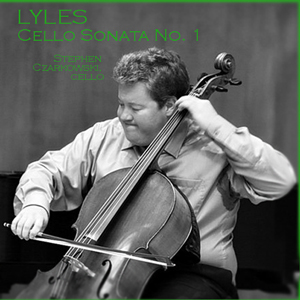
Cello Sonata No. 1, III. Andante (Elegy)

Okay, I think I’m done.  Notice that I did not say I think the piece is finished.

I am particularly concerned that mm. 51-56 are suspect.  I am willing to throw them out and write something more stringent.  I await your comments.

Cello Sonata No. 1 (2011)

I. Moderato | score [pdf] | mp3

II. Adagio | score [pdf] | mp3

III. Andante (Elegy) | score [pdf] | mp3

Cello sonata, mvt 3, take 8

I’m quite pleased with some of the way it’s going at the end of today’s work, but as always I’m flummoxed by my lack of theoretical knowledge.  You wouldn’t believe how long it took me to find the harmony for one measure, and I’m still not sure of it.

Where it tapers off is where I stopped for today and headed outside to bask in the labyrinth. Again, there’s a gap, then what I intend to be the ending.  I’m sure you’re wondering how I’m going to connect it to what’s there now.  I am, also.

III. Andante (Elegy): mp3

Cello sonata, mvt 3, take 7

I actually made real progress last night, although it’s no longer than it was before.  I decided to do the old pull-back-then-build-higher trick, so I sliced off what I wrote last week after the run up to the high B-flat and brought it way down.  Now it’s taken a turn for the purely tonal, which is fine.  Sounds more relaxed, though it’s not really.  I also decided to give the pianist’s left hand a rest for a few measures…

III. Andante (Elegy): mp3

My plan is to forge ahead this week and this weekend and try to have the whole thing done by the end of this month.  Because I actually have other projects facing me.

One of which is not, alas, Christmas Carol.  Paul Conroy, in a pinch over their Christmas Carol this year, called as I was pulling out of the airport parking lot Sunday night: would I allow them to produce my old script/score?  Of course, I said, providing I have the time to reinvent the sound files.

The problem was that all the files were old midi files, unplayable on any software I now own.  I would have to 1) find them; 2) convert them into Finale files; 3) clean them up (many of them were actually played in by my unreliable fingers, so they get converted with all kinds of thirty-second note lead-ins and general messiness); 4) reorchestrate many of them to fit the new instrumentations available to me; 5) learn how to export them to some sequencer so that all those vamps in the Graveyard Scene and the Finale can work—all before rehearsals have to start.

Alas, I failed at step one.  I cannot find the files.  I know I had them on the last two computers I owned, so why they’re not on this one, I have no idea.  This means that I would have to build everything completely from the original score, which is an appalling mess.  The overture was never written down; it went straight into the sequencer.  I futzed with many of the pieces in the computer and never printed them out.  I would be hard pressed to get this done by next November.

Still, I began to run through the music in my head, and you know what?  It’s still good.  Hardly anything else I wrote from 30 years ago still stands up, but Christmas Carol does.  For those of you who remember it, think of: “A Reason for Laughter,” “Cratchit’s Prayer” (aka “The Gag a Maggot Song”), “20 Questions” (with lyrics by Marc Honea), “Ignorance and Want,” “People Like Us”, and the Finale.  ::sigh:: Good times.

Maybe next year, as we say in Sondheim.

Cello sonata, third mvt, take… let’s call it 6.

I know, it’s been forever. I’ve been busy. And afraid. I’ve been busy and afraid. I decided a while ago what I wanted to do to this last movement, and now I’m at the point where I have to by god do it. Very very scary.

Anyway, I worked tonight. I had already lopped off the pastoral interlude bit, and recently added the three measures of the ending. Now I had to start hammering out where it went from where I lopped it off.

It’s off to a good start, I think, although it’s not elegant. And where it peters out is awful. I’ve left it for the moment, so enjoy its awfulness while you can. It won’t be here when you get back. Maybe.

If you choose to listen to it now, be advised that when it cuts off, there are two measures of rest, and then the ending as it stands now. See what you think.

III. Andante (Elegy): mp3

A world premiere

Score one for me. Last Thursday, in Valdosta State’s Whitehead Auditorium, Maila Springfield and her husband David had their faculty recital. On the program: “Six Preludes (no fugues),” written last summer expressly for Maila.

Maila Gutierrez Springfield was the staff accompanist for many years at GHP, and she is a goddess. Warm and supportive personally, she is a phenomenal pianist. I was in the chorus room for one large rehearsal when she inexplicably hit a wrong note—the whole room gasped and we had to stop. That Maila could ever play a wrong note was simply unthinkable.

Several summers ago she asked me to write something for her, David (jazz trombonist), and their friend Joren Cain (saxophonist) to play when they toured. Needless to say, I have not wrapped my head around that combination yet. But I kept her in mind, and in June of 2010 something made me start writing. I blogged about it after the fact, so I don’t have a post exclaiming, “I know! I’ll write some preludes!” but I suspect it was having been at GHP to help Marcie get started in the role of assistant program director for instruction and being with Maila at some point that week.

Here’s a pretty irony: last Thursday, I was engaged in tidying up my office, i.e., exploring notebooks that I had moved from my old cubicle to my new one and determining whether I needed to keep them (mostly not: manuals for software no one has owned for ten years, that kind of thing), and I came across a Georgia Music Educators magazine from 2002. (My predecessor, Joe Searle, was a musician.) I flipped idly through it, thinking maybe Joe kept it because he was in it, but I didn’t see any reference to him or to GHP.

However, I did see two things. Follow this chain carefully: Maila asked me to write for her after hearing Stephen Czarkowski (of cello sonata fame) butcher a reading of “Blake Leads a Walk on the Milky Way” with the orchestra; “Milky Way” is sitting now on the desk of Dr. Tim Seelig, waiting for him to have time to look over it (and then, nice man that he is, trying to figure out how to tell me that it’s not to his taste); Tim Seelig was the director of the Turtle Creek Chorale in Dallas; and there, as the highlight of the upcoming GMEA convention, was the Turtle Creek Chorale and a fabulous headshot of Dr. Seelig. Cool!

But in the back of the magazine, under University News, there was the announcement that Maila Gutierrez Springfield had been hired by VSU as staff accompanist and piano instructor. This was Thursday morning. That evening, Maila premiered “Six Preludes.” ::cue Twilight Zone theme::

So how did it go, this world premiere? I haven’t heard the performance yet—Maila had hoped the University would select her recital for web streaming—but they didn’t, but she reported Friday morning that the piece was the audience favorite. Many were astonished that I was a composer—I am such a shy, retiring bastard—and expressed an interest in hearing more of my music. Whether she’s just telling me that to make me feel good or whether it’s a wonderfully true fact, I appreciate the sentiment.

I’ve asked Maila to send me a CD or a DVD of the concert. I’ll let you know when I get it.

Now, on to the cello sonata!

Cello Sonata No. 1: II. Adagio

I think I may be done with the second movement, Adagio, of the cello sonata. I swore that I was going to get it done this weekend, and I have. At least, I have filled in the gap between what I tinkered with in July and the final four measures. I don’t know what else to do with it.

As I mentioned before, playback is problematic with this piece, since there’s a section where the cello drags behind and the piano maintains a steady beat. If you look at the score, you’ll see copious instructions to the players on now to manage that. The computer, of course, just plays it all as if it’s in perfect alignment.

I know that the asynchronous playing works because I got two students to read through it this summer. They were puzzled, if polite, and I think they thought it was too easy for them to be bothering with. No matter: what I thought I heard in my head actually works, and of course it’s easy, it’s a break for the pianist between the first and third movements, which are pretty relentless.

So here it is:

II. Adagio: score [pdf] | mp3

Now to finish the third movement. Not today, of course. But soon. Soon.

A pretty thing

In adherence to my Lichtenbergian oath (did we ever come up with one of those?), I have been avoiding working on the cello sonata since I got the first third written earlier, and today I decided to look through some of my older music files. I came across the Mass in C.

This is something I don’t think any of you have ever heard. I wrote this probably more than 20 years ago, and I know we had one readthrough at First Baptist one afternoon, and I think I remember that Denise Johnson and Julie Aagesen sang the solos in the piece I’m sharing. Other than that, it’s never been performed.

Nonetheless, I opened some of the files this afternoon and discovered that they still held up. They’re very simple harmonically (I toyed with subtitling it Missa simplex, but that was kind of icky so I stopped), and I may have to revisit the entire work at some point. There are some clumsy bits that I know enough now to fix.

The Benedictus in particular is quite lovely. Score [pdf] | mp3

Enjoy. Disclaimer: the file was sucked up into Finale 2010 from a very old file, and none of the dynamics or tenuti or anything subtle came with the notes. It’s pretty raw. Try to hear it under lights.

(I’m also avoiding the Welcome Christmas Carol Contest deadline, August 8, a setting of some text for men’s chorus and English horn. Someone should write me a text. I’m thinking an elfin kind of piece, sort of playing against the stereotypically lugubrious nature of the instrument. In fact, now that I’m writing this, I remember that I had in mind an idea for a kind of ballad to one’s beloved that involved the Yule. I knew I should have written down those fragments. Garn.)